Hercules Mulligan Rum + Rye

Patriot, spy, hero, and the inspiration for a new brand

I have known Steve Luttmann, the creator of Leblon Cachaça, for some time. As a spirit industry veteran, I always felt that Steve had a wonderful capacity to think outside the box and with his most recent effort demonstrates that, and much more.

Not only is the concept and product unique, but the route to market he has developed is extraordinary and may become a benchmark for the future of new brands.

But, I’m getting ahead of myself, so let’s start with the back story.

The inspiration

Steve is a history buff who grew up in Valley Forge, went to Revolutionary War reenactments and even participated in one when he was a kid, dressed in a continental soldier uniform.

The book Alexander Hamilton, by Ron Chernow fascinated him as it did Lin-Manuel Miranda, the creator of the outstanding Broadway musical, Hamilton. He became enthralled by the story of one of Hamilton’s revolutionary war friends, Hercules Mulligan.

Mulligan emigrated from Ireland in 1746 and eventually became a well-known tailor catering to wealthy British merchants and mainly senior military officers. His craftsmanship and personality — together with a few drams of liquor — made him a trusted friend of the British officers and thereby an important spy for General Washington. Mulligan saved Washington’s life twice from plots to kill or capture him. He also revealed important British secrets that significantly helped the Continental Army.

Steve’s fascination with Hercules Mulligan — tailoring uniforms, serving drinks and getting secrets — led him to develop a spirit based on this tailor-spy-hero and with a product reminiscent of the time.

Steve sums it up nicely:

“Operating in the shadows, (Mulligan) was a hero of the American Revolution, brave enough to take a stand against the injustices he saw in the world and risk his life more than once to save our founding fathers. Deploying all the tools at his disposal, including his Irish wit, off-the-cuff style, and secret stash of liquor, Mulligan seamlessly elicited secrets from the British military. He is the unsung hero of the time and this liquid pays homage to his independent spirit…”

The product

Hercules Mulligan Rum + Rye is based on a recipe from the revolutionary war period and is a 50/50 blend of Caribbean aged rum and home-grown American rye whiskey.

If you recall your American history, then you know that the popular libation of the time was Rum from the Caribbean. But the colonists were miffed when the British taxed the ingredients for their booze under the Sugar Act of 1764. Consequently, they began making liquor using the plentiful rye in the colonies and even mixed the rye with the rum. In fact, mixing different types of spirits was very common during that period.

In addition, the product uses fresh, organic, ginger root that is macerated in the rum and rye blend, and a splash of bitters is added. On the one hand, the product tastes like a ready-made Old Fashioned. But, before you think of it as a prepared cocktail, recognize that it is way more than that. It’s best enjoyed just over ice, but also great with a range of mixers and excellent as a shot.

The product currently is available on Flaviar.com (more about this in a moment). It is 86 proof (43% AbV) and sells for $38.00 for a 750ml. And get this — there were only 2,000 bottles available at time of launch.

The obstacles

Back in the late summer of 2017, Steve introduced me to the concept and the brand and I fell in love with it. We talked about which companies to approach to make this happen — from production to sales. After all, it was beyond just an idea, with a formula/recipe, a full-fledged concept and positioning, and even a package.

To maximize the full potential obviously required a company to manufacture and sell the brand.

Ah, but times have changed for new products and especially innovative brands. Companies would rather buy than build, assuming what they buy already has traction. So much for risk taking in the liquor business. That’s why many of the winning new brands come from entrepreneurs not corporate types.

Oh, and let’s not forget the brave middle managers who combine the avoidance of risk with a large dose of not-invented-here fears.

So, the response from the “big boys” was summed up with comments exemplified by this: “I love the idea, come see me when you have some proof of performance.”

And Steve set off to do just that.

The route to market

To produce the liquid, Luttmann turned to Mario Mazza, whose family has been making craft beverages on the shores of Lake Erie for more than 45 years. They produce an array of terrific craft beer, wine and spirits. I know and have visited the Mazza facilities on a number of occasions and they are a highly innovative company with many outstanding people.

Together with Grisa Soba from Flaviar, Steve and Mario spent a great deal of time blending three different rums, with three different ryes (including from NY State) and even produced a proprietary bitter to be used in the product. (You’ll read more about Mazza in a future article.)

The ginger, however, was another matter. Conventional flavor houses could not produce a ginger that met Steve’s expectations. Most were flat and very artificial tasting. Besides, with ginger from a flavor house, the TTB would require the words “natural ginger flavor”, rather than simply “ginger.” In order to have the words, “Rum, Rye, Ginger & Bitters” on the label, he had to use fresh ginger. So, he tried dried ginger but Grisa Soba, Founder of Flaviar, convinced him that the aroma was missing and needed fresh ginger. But, fresh ginger is difficult to work with and needs expertise to overcome the complexity. (By the way, Grisa is an accomplished whiskey and other spirits expert.)

To deal with the problem, he approached his friend Josh Morton, CEO of Barrow’s Intense Ginger Liqueur for help. Josh confirmed the difficulty and offered macerated fresh, organic ginger root in the rum and rye.

With product formulation and production under control, Steve now faced the daunting task of sales and marketing.

Enter Flaviar

Here is how this Direct-to-Consumer DtC membership club describes itself:

“Flaviar is a band of spirits enthusiasts, inspired by culture, rich history and the art of distillation. We forage the World of Spirits for the finest, rarest and most unique expressions out there and pack it all into a 21st century Members Club.”

Flaviar, is arguably among the most important DtC provider of spirits and the leading members club for enthusiasts. Steve teamed up with them and they are the exclusive online seller and will basically serve as an incubator for the brand. In fact, Flaviar has quite a number of owned brands sold on its platform —cognac, rum, scotch, brandy, among others.

And in case you’re wondering, like most DtC companies, Flaviar is in full compliance with the 3-tier system.

The role Flaviar played as a partner in this venture turned out to be more than just distribution. In addition to advice on the need for aroma from the ginger, Grisa Soba (the founder) had other ideas about the product, including its proof level. Further, Flaviar has a team of designers and social media experts who played an important role.

Flaviar has a very large and growing membership base and the audience for Hercules Mulligan Rum + Rye is far reaching and includes enthusiasts and influencers.

I plan to write more about Flaviar and its role in the DtC market, but for now, here are some of the key benefits of working with them. They provide a fun and entertaining description of all the products they sell; shipping is free; their tasting notes are in depth and use fun graphics; and they go so far as to produce a trademarked “Flavor Spiral.”

“The Flavor Spiral™ shows the most common flavors that you’ll taste in Hercules Mulligan Rum & Rye and gives you a chance to have a taste of it before actually tasting it.”

Here is what they say about the brand.

Above all, Flaviar’s main benefits are, in my opinion, a fast and effective way to gain awareness, build a following, gain invaluable data insights about buyers, and provide the important (and elusive) proof of performance.

Did I say incubator? A better description is ‘incubator on steroids.’

Proof of performance? The brand was launched on Evacuation Day 2019 (November 25 commemorating the departure of the British after the war). By January they had sold out.

What’s next?

All signs so far are that the strategy of an alliance among an innovator, producer, and online sales are working well. And, if I know Steve Luttmann, the Hercules Mulligan brand will become a franchise with endless extension opportunities — perhaps an Irish and Rye whiskies combination, double ryes, and others.

What makes it particularly interesting to me is the role of online sales as a brand launch pad. All new brands start in stores and bars. Remember the expression, “brands are built bar by bar?” Well, Hercules Mulligan is among the first to turn things around with bars and stores the second stop on the brand building trail.

I think it’s the future for new brands and products, particularly those that are highly innovative.

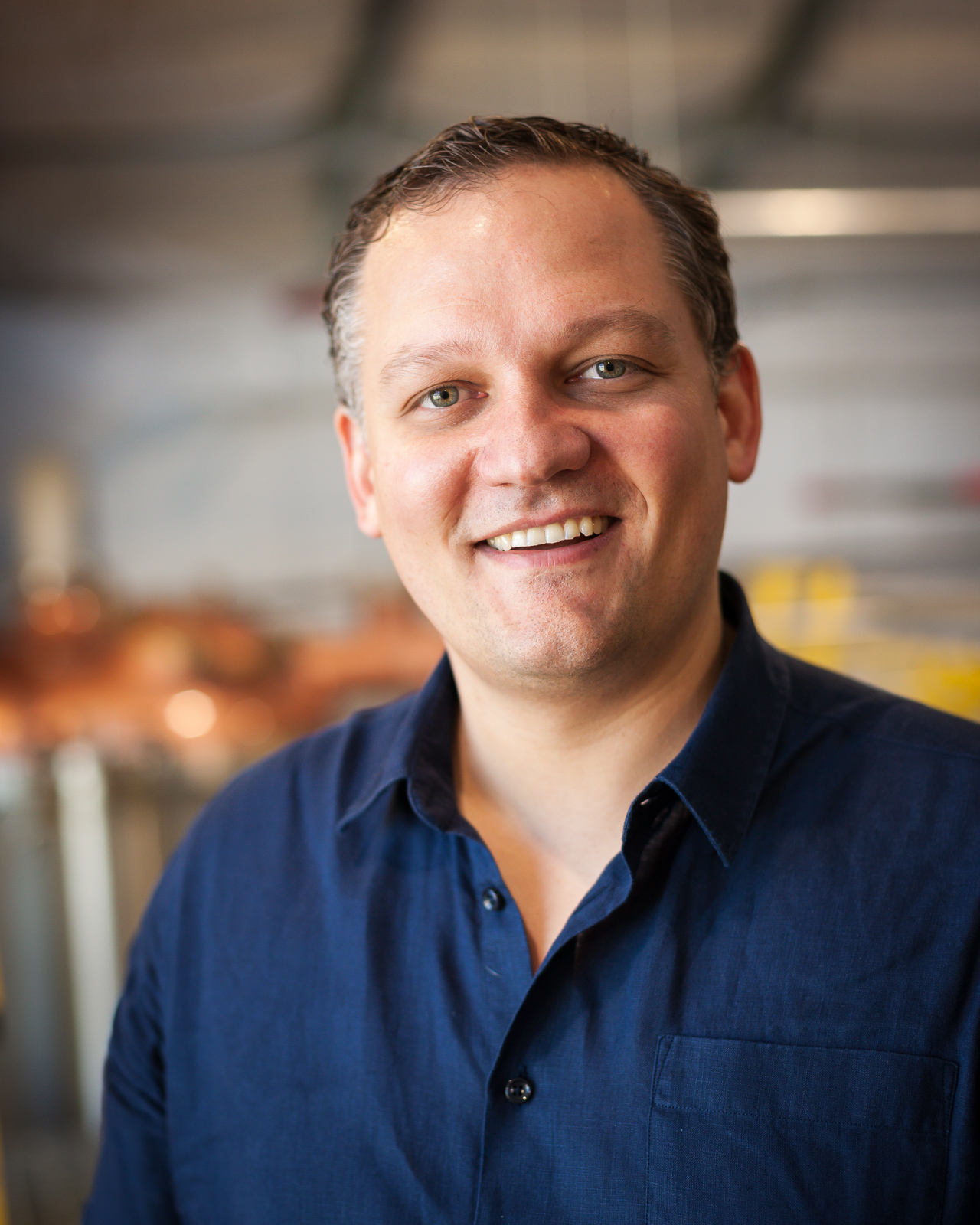
(l-r) Grisa Soba, Flaviar; Steve Luttman, Hercules Mulligan; Mario Mazza, Five & 20 Spirits.
Leave A Comment

The Vale Fox Distillery Story

The birth (pains) of a booze business

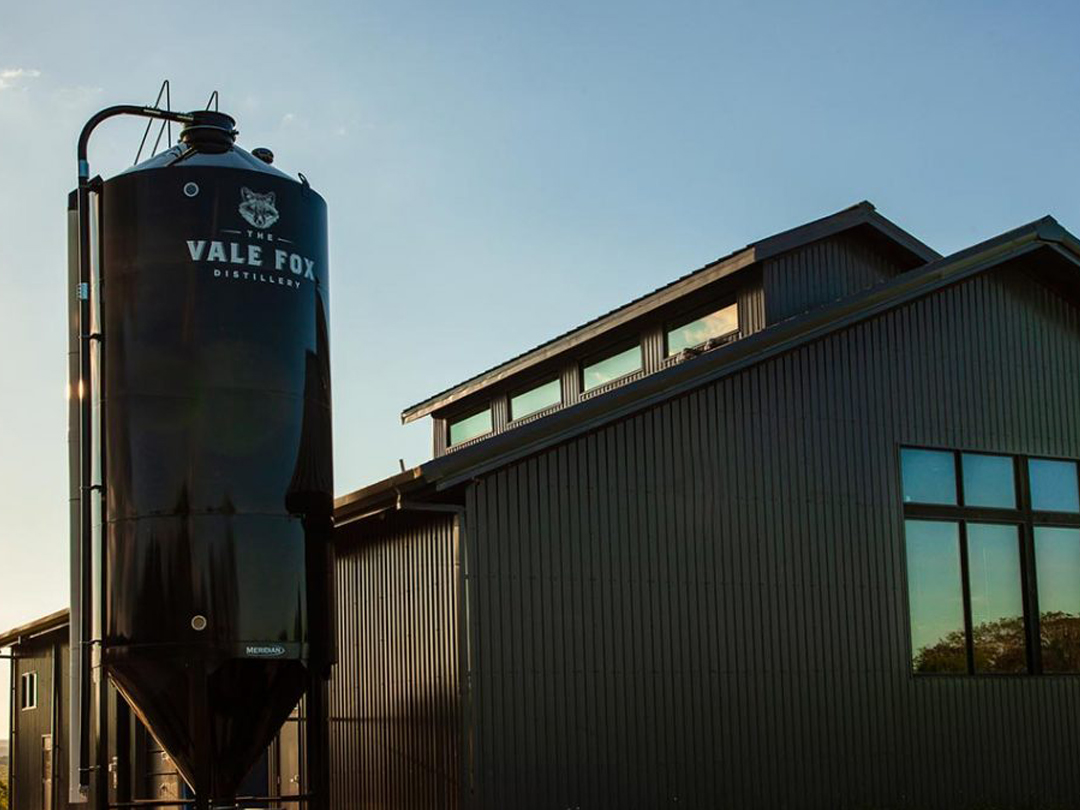
On August 26, 2019, the “birth” announcement press release appeared describing the much-awaited launch of The Vale Fox Distillery:

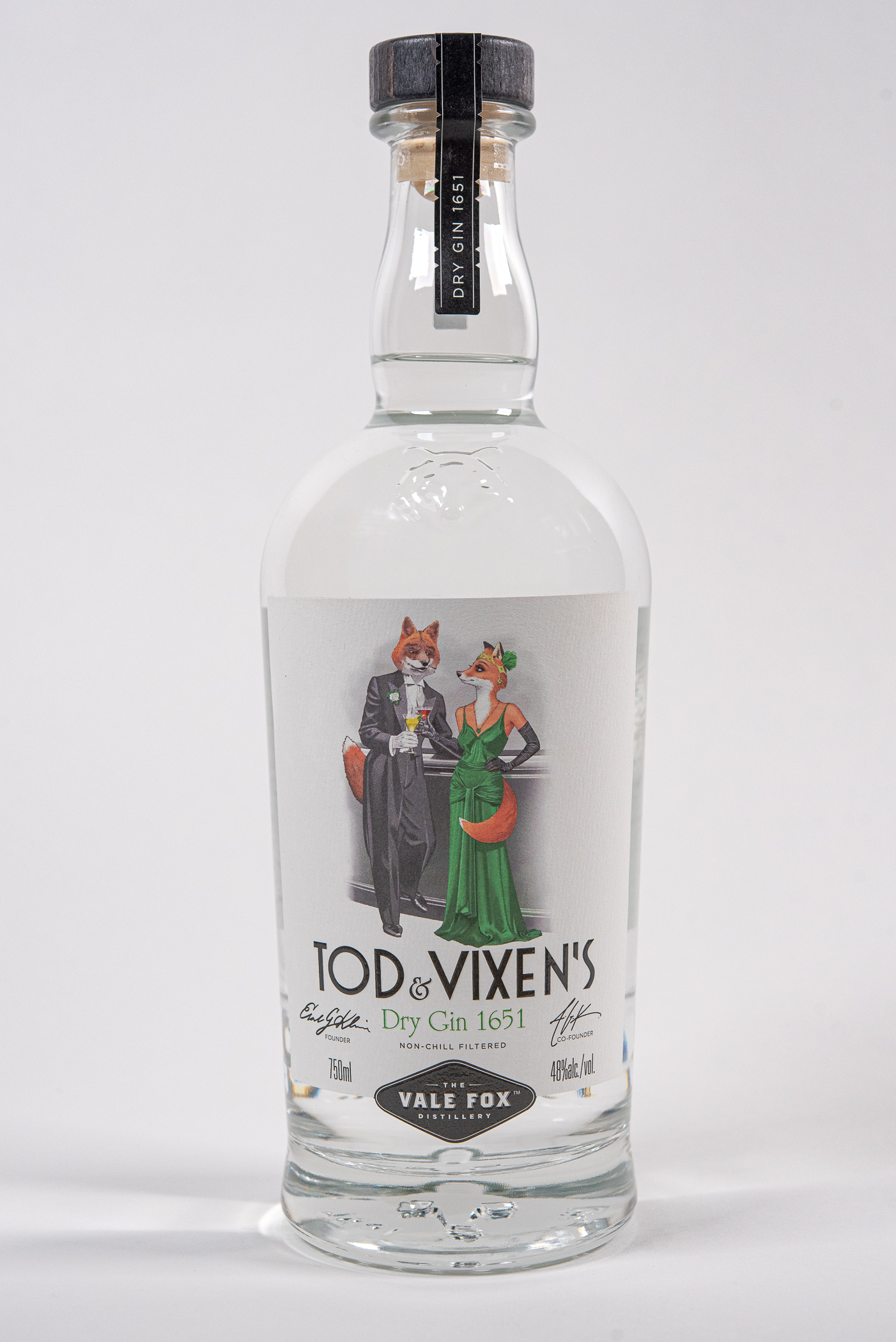
INTRODUCING TOD & VIXEN’S DRY GIN 1651 BY THE VALE FOX DISTILLERY

Debut Release Made in New York by British Master Distiller and Trio of World’s Top Bartenders

It went on to say:

With three of the world’s top bartenders, gaz regan, Leo Robitschek, and Jeffrey Morgenthaler, involved from day one, Tod & Vixen’s Dry Gin 1651 is specifically designed to enhance flavors in cocktails. Add the expertise of our British Master Distiller and you have one lively mix of British sophistication and American mischief.  Tod & Vixen’s Dry Gin 1651 is made from the cocktail backwards…all the way back to the year 1651, in fact.

And therein lies my tale…

The back story

The email was similar to the many I receive about starting a distillery and looking for advice and assistance. Most are from well-intentioned dreamers who think the path to success and fortune can come out of a bottle. Like this one, “my grandmother passed away and left me $100,000… I’ve always wanted go into the liquor business… can you help me launch the business.” My advice: “Perhaps you should invest the money.”

But, this particular email caught my eye and felt like it might be worth pursuing further. It was from a gentleman named, Eral Gogol-Kline.

“I have been reading booze business for a few months now and have really enjoyed your insights into the spirits and wine industry. After spending the last 13 years in investing and finance, I switched gears and am currently starting a whisky distillery in the Hudson Valley. I would love to talk to you about the services you offer.” (That was in July, 2015.)

So, we arranged a call and I had two questions, the answers to which would determine if I could really be of help. “Do you plan to make vodka while your whisky matures.” The answer was no, he wanted to make a world class gin. Okay, that was intriguing and welcome news. The next was “Do you have an exit strategy?” His reply surprised me: “No, I don’t; I suppose down the road that could conceivably happen but my plan is to build a business for myself, my family, and the future.” I couldn’t wait to get started.

My journey with Eral Gokgol-Kline began later that year.

Eral Gokgol-Kline

About Eral

What impressed me most about Eral were a number of things. Here is a person who is willing to give up a successful global investment practice to pursue his dream of starting a distillery. Born abroad to parents involved in international non-profit organizations, he spent his childhood in Turkey, traveled the world, and ultimately moved to the US, where he went to school. Then spent eight years living in London working in investment funds.

Above all, it was (and still is) clear to me that distillation is a central part of his nature. His love of craftmanship and quality together with studying about and loving single malt scotch (which he learned to appreciate from his mother), is palpable and very impressive. I’ve met many distillers (talented newbies and seasoned pros) and Eral can hold his own with the best of them.

I later found out that distilling is a part of his DNA. He did some genealogy research and learned that his great, great, great, etc., Dutch grandfather founded a New York distillery in 1651, about an hour away from The Vale Fox Distillery. (By the way, vale is an old English term for valley.)

The Team

A significant flaw of many startup distillers is their belief that their efforts are bound for success, no matter what. “Build it and they will come,” works only in the movies. A distributor friend puts it this way: “I have a warehouse full of other people’s dreams.”

Not Eral. His passion was not equipped with blinders. As he set out on this journey, he did two things — studied and learned about all aspects of the business and surrounded himself with some extraordinary advisors. So, by the time I got involved he was well on his way with the overall plan for the Vale Fox Distillery. Ultimately, his goal was to produce world class American Single Malt Whisky. The ability to replicate, and arguably surpass the malts from Scotland, was demonstrated by such award-winning malts as Kavalan from Taiwan, and a host of Japanese products. Eral reasoned that American ingenuity, history and whiskey making skills would be a perfect match with the traditional approaches used in Scotland.

His advisors included, the late Dr. Jim Swan, a chemist formerly affiliated with the Scotch Whisky Research Institute and inventor of the unique aging casks now used by The Vale Fox Distillery. And, Harry Cockburn, with over 45 years of distillation experience and former affiliations including the Bowmore Distillery. Douglas Cruickshank, former Production Director at Chivas Brothers, joined later.

With his advisors’ guidance, he designed the distillery and purchased the equipment —pot stills made from the highest purity copper by Forsyths, a Scottish coppersmith with over 200 years of experience.

Most importantly, he purchased a small batch estate located on a 120-acre plot in the Hudson Valley region of NY state. But, to produce a world class single malt takes time and Eral planned to exceed the minimum aging requirement. In the interim, he decided to produce an exceptional world class gin. Again, by the time I had come along he had created the brand — Tod & Vixen Dry Gin 1651 — including concept, branding, and packaging. (More about the gin in a moment.)

To produce the gin, and ultimately the single malt whisky, Eral hired Roselyn Thomson as the master distiller. Her career in the whisky industry began in 2002 and worked in the UK for such notable companies and brands as Macallan (the first female distillery operator), Aultmore, Dewar’s, and others. In short, the perfect candidate to blend the two whisky cultures.

The most recent addition to the team is Cliff Oldfield, who worked with me during my Mongolian Vodka journey and more recently with Dad’s Hat Rye. Cliff manages sales. Two other important players have rounded out the team — Kate Laufer Gorenstein PR, and Mindflint, a digital and social media agency.

And so, the group in place, the distillery up and running, the launch of the gin took place at the end of August this year. But not without birth pains.

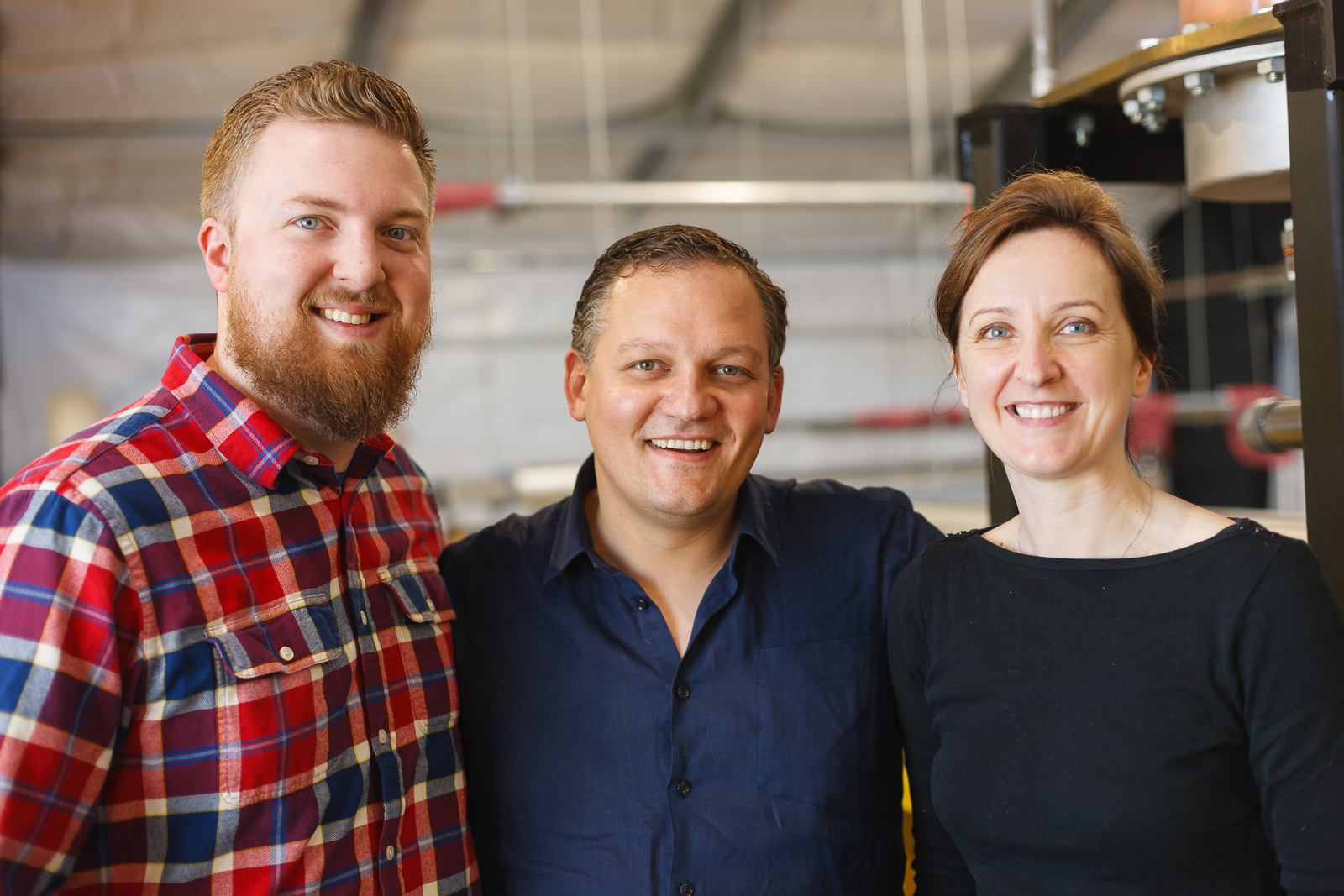
Cliff Oldfield, Eral, Roz Thomson

Tod & Vixen Dry Gin 1651

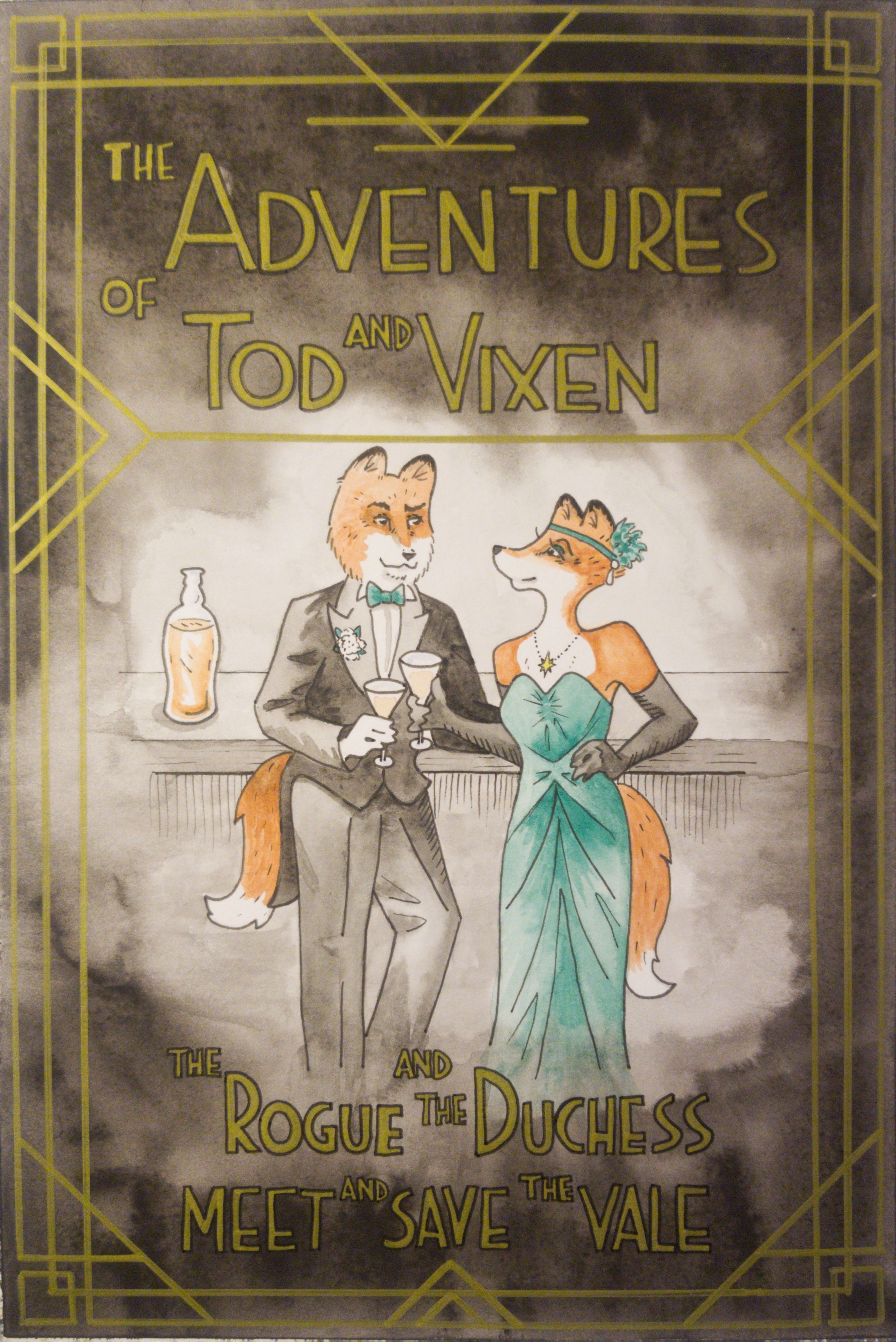
Let’s start with the name. Tod is the name for a male fox and Vixen the name for a female fox. When I first saw the branding and packaging, I fell in love with it. It is playful and the two characters reflect the positioning of the brand. But more than that, they represent an interesting point of departure for a gin brand that set the stage for the overall strategy and reason for being — to succeed a brand must cut through the clutter of new gin brands by being unique and relevant.

From 2015 to 2018, nearly 600 non-whiskey brands were introduced in the US and over 20% of those products were gin. That said to Eral and me, that the single most important question we would be asked by both the trade and consumers would be — why this gin? What makes it different and something I should buy?

In short, we needed to cut through the clutter and distinguish the brand in the market. A number of ideas emerged mainly centered on the product itself. Here’s how Eral and his team describe it on their website:

“How our products are consumed is as important to us as how they are made. So, we recruited a team of revered cocktail professionals led by Gary (gaz) Regan, including Leo Robitschek and Jeffery Morganthaler, early on and paired them with our British Master Distiller to help us develop our gin. The result is one lively mix of British Sensibility and American Mischief©.”

Part of the answer was to develop a product with the guidance of a team of cocktail experts and “make it from the cocktail backwards.” After all, gin is almost always consumed in a mixed drink, most notably the Negroni.

A series of back and forth blind tastings among these three gentlemen ultimately produced a product that gaz regan (Mr. Negroni) described as “this gin rocks.” More specifically:

“… designed to enhance the flavors of gin cocktails, our inaugural Tod & Vixen’s Dry Gin 1651 is made by macerating botanicals — including juniper, angelica root and rooibos tea — to extract their flavors, then non-chill filtering to retain the unearthed profile. The resulting sip is bold on the entry, giving way to a well-balanced, vibrant gin with a weighty mouthfeel.”

Tod & Vixen graphic novel
Tod & Vixen Graphic Novel

To enhance the playful aspects of the gin, I was charged with the fun mission of writing and producing The Vale Fox Distillery’s one-of-a-kind graphic novel for Tod & Vixen’s Dry Gin 1651. It tells the tongue-in-cheek tale of two eponymous grey foxes with a penchant for imbibing who embark on a quest to save their homeland from imminent environmental destruction. (If you would like a copy, you can get it on the website here.)

Along the way…

As a craft distiller in New York State, The Vale Fox Distillery is entitled to a number of benefits. So long as 75% of ingredients are sourced from the state, a distiller can self-distribute, conduct tastings, sell product at their location, and a number of other important benefits.

But producing a world class gin is far from a “slam dunk” undertaking. “Daunting” is a better description. Despite the planning, the ideas, and the team, a parade of issues and delaying factors entered the picture, in addition to the usual back and forth with the TTB (Tax and trade Bureau) and NYSLA (NY State Liquor Authority) approval process.

The township of La Grange, NY, where the distillery is located, needed to grant approvals and assure compliance with zoning issues. Meetings with township officials, individually and at town meetings, were met with minor concerns but took some time and resulted in delays.

The biggest problem was getting Roz Thompson a visa to work as distillery manager. This occurred at the height of the current Washington administration’s concern about immigration and entry into the US. Never mind that she is a top-notch distiller with incredible and arguably unique skills — it took a battery of lawyers, a ton of paperwork, and many months.

Most ironic of all was the fact that Eral is a committed environmentalist who went out of his way to steward the protection of the land and its inhabitants. The property is home to a herd of deer, turkeys, a bobcat, tons of birds of prey and even a “shy little fox that runs around in the mornings.” The operation runs on geothermal energy, and he’s gone out of his way to protect two endangered species, the Indiana bat and the Blanding’s turtle. The irony was the nonsensical demands (in my view) of the state authorities with peculiar guidelines for protecting the turtles. More delays.

Oh, and let’s not forget the interruption in shipping the labels from Europe because of the summer.

At the end of the day

The standard definition of an entrepreneur is someone who organizes, manages, and assumes the risks of a business or enterprise. To me there’s more, including tenacity and constant risk taking.

Sure, all startup entrepreneurs have these traits to a more of lesser degree. But I have never encountered one who said this in a Daily Beast interview:

“You know, we did a lot of stuff—we failed a lot,” he says. “We learned from our failures. And to me, failing is very important because if we’re not failing, we’re really not trying.”

Despite the challenges and hurdles, Eral has begun to see his dream come to fruition. And, I must tell you that Tod & Vixen’s Dry Gin 1651 is an outstanding product, not only in a Negroni but in any gin cocktail. In addition, Eral is working on a number of gin variations, each more exciting than the other.

But, I can’t wait to try the (American) Single Malt Whisky.


Leave A Comment

“Hey, there’s wood in my bottle.”

Wood takes an innovative journey

Who can argue that wood plays a vital role in the taste of your favorite whisk(e)y. In fact, in a Vinepair article it’s estimated that “wood is responsible for 60 to 75 percent of the taste of a finished whiskey.”

More than that, wood is the star of whiskey making with various types of oak, casks that previously held other spirits (even wine), different toasting techniques, even double barrel resting. Maker’s Mark 46 goes one step further and adds wood staves to the barrels. Described as follows: “The innovative wood-stave-finishing process starts with fully matured Maker’s Mark at cask strength. We then insert 10 seared virgin French oak staves into the barrel and finish it for nine weeks in our limestone cellar.”

A new and unique approach

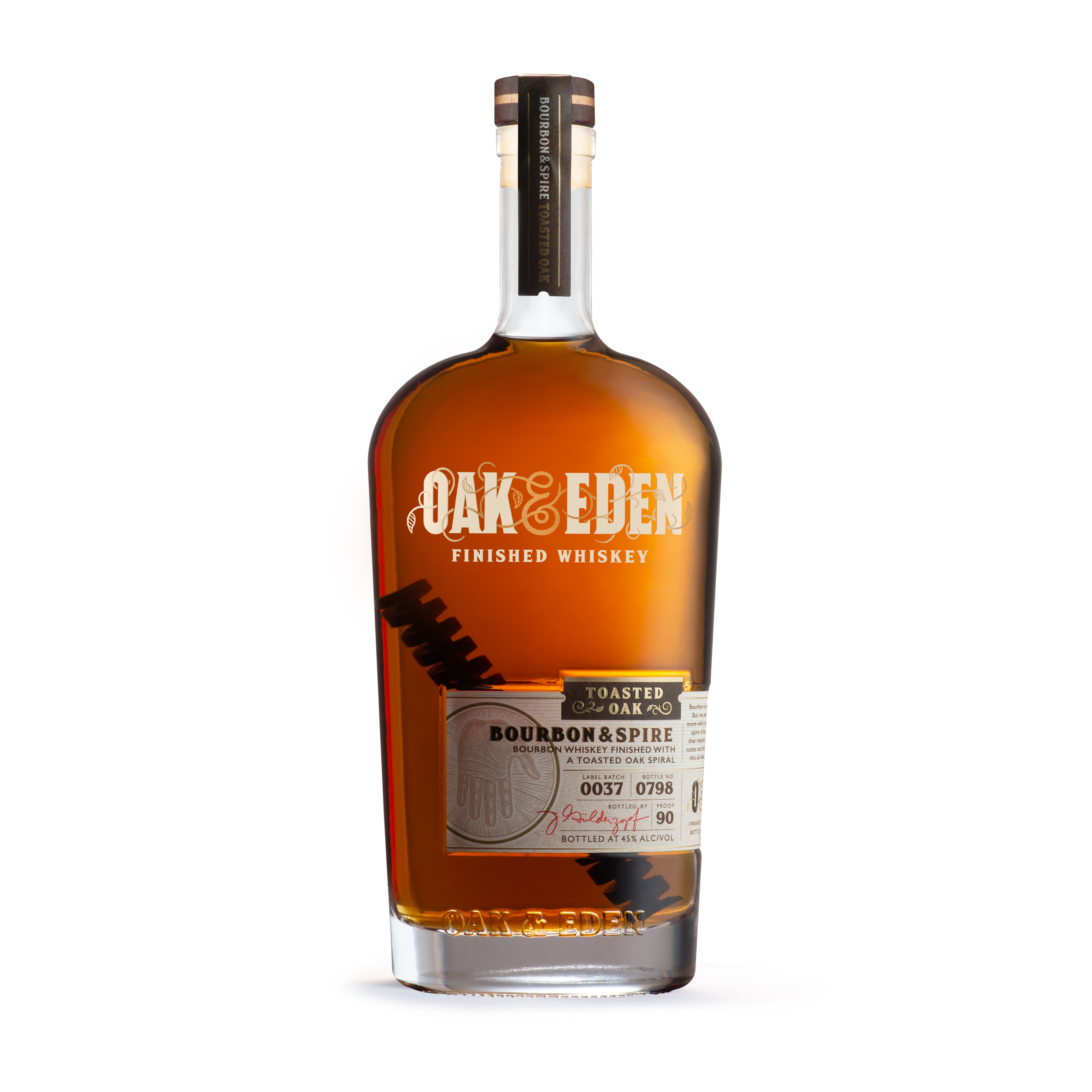
The Sanctified Spirits Company, a startup in Texas, which owns the Oak & Eden brand of bourbon and rye whiskeys, uses a spiral piece of wood (referred to as a spire) inserted into the bottle. This patent pending technique, which they call in-bottle finished whiskey, consists of a 5-inch spiral cut piece of wood from the same species of wood as the barrel. They rest the product for 6 weeks and sell the whiskey with the spire in it.

While I am not a whiskey taster/reviewer, I’m an avid American Whiskey fan, so I tried it to see what it tastes like. The one I tried was Bourbon & Spire (“Bourbon Whiskey finished with a toasted oak spiral”). I loved it.

Here’s how Brad Neathery, Co-Founder and CMO, describes the process:

“The technique allows us the ability to create millions of combinations of whiskey expressions through the selection of the base spirit (bourbon, rye, wheated bourbon, single malt, etc.), the wood type of the spire (American Oak, French Oak, Cherry, Ash, etc.), the fire level we expose the spire to (light toast, medium toast, char, etc.), and the spice or liquid we can infuse the spire with (wine, coffee, rum, beer, etc.).”

About the company

The company was founded by Joe Giildenzopf (CEO), his brother Jamie Giildenzopf (Co-Founder) and Brad Neathery (CMO) in 2017.

When I got a bottle and while doing my research for this article, I noticed the references to God, Christianity and Creation. For example, on the back label it says, “The name pays a gracious homage to both the perfection of the creator who breathes his unique spirit into us, and the wood that infuses our other favorite spirit, and it’s complex flavors.” So, I asked Joe and Brad about this aspect of the company.

“We are Christians. That being said, this is not a Christian whiskey. We’re not attempting to proselytize with this whiskey. We do however, because of our faith and our understanding of Scripture, see the world through that lens, including the production of whiskey. When He turned His attention to making mankind, he did not speak us into existence, he instead used his hands. Taking the elements of the earth and forming a being… breath(ed) into us, which is translated in Hebrew (as) ‘inspire.’ … We call the whiskey Oak & Eden, in-bottle finished, inspired whiskey. And because that great creation story began with God in the garden, we named our product Oak & Eden. Oak is emblematic of wood in the bottle. Eden is the perfection of God’s creation.”

I mentioned these references as religious overtones. Joe corrected me — “I see them as a perspective on the world.”

Makes sense to me. These folks are passionate in what they do, spiritual in how they approach business and it comes together in an innovative, great tasting product.

The products

The current line up consists of Bourbon & Spire, Toasted Oak; Rye & Spire, Charred Oak; Rye and Rumba, Rum Soaked Oak; Bourbon & Vine, Cabernet Steeped Oak.

There’s an excellent review of the brands and tasting notes in this Forbes article.

Brad told me about their newest efforts:

“By the time that you’ve written it, we will have released a collaboration project with Rahr and Sons Brewing, in Texas. They’re a beer company. We want to have two products, a rye infused with their IPA, and a bourbon infused with their Scottish ale.”

The products are all 45% AbV (90°) and sell for $40 for the Bourbon and Rye. Oak & Eden buy their whiskeys from a number of sources, including Midwest Grain Products (MGP). They curate, buy the whiskey, blend, bottle, and finish it in-bottle with the spire.

They launched in May of last year and Oak & Eden is available in TX, CO, KY, MI, OK, and LA. This year they anticipating being in GA, KY, IN, GA, NY, IL. They expect to be national by the end of 2020.

They sold 3,200 (6-pack) cases in eight months in Texas, among the top selling new items in the state. They have a national contract with RNDC (Republic National Distributing Company).

Oak & Eden has three patents, according to Joe:

“We have an exclusive license to the patent for the manufacturing of the spire. We don’t own that, but our cooper does and we have that exclusive license through the life of that patent. We also have a patent on in-bottle finishing, which is the technique of finishing the spirit in a closed glass container with a spiral cut piece of wood. And, then we have a design patent on the bottle and the way in which the spire rests in the bottle. So yeah, we’ve got pretty good IP wrapped around it.”

I asked about their interest in making this innovation available to others. Their answer is they talk about it but have not as yet come to any conclusions, much less a strategy.

The marketing approach

Speaking of strategy, one thing I did not ask about but has since occurred to me, is why they launched so many line extensions from the outset. If it were me, I might have opted to launch with two then gradually roll out the others over time or with selected markets. I would be concerned about stretching the resources too thin.

But I suppose it makes sense. There’s a need to show the range of products using this new technology, an account doesn’t need to purchase all of them, and perhaps they have the financial and other resources to “blast” in rather than “soak” in.

The article cited above in Forbes, raised an important question that I am sure is on the mind of many of you — legitimate innovation or marketing gimmick? The writer’s conclusion:

“I think this is a legitimate innovation and one to get excited about … As a finishing technique, the spire offers a lot more flexibility for finishing whiskeys and dramatically expands the options for different finishes beyond the usual approach of barrels that previously held another liquid.”

I tend to agree. But, the verdict is up to the consumer.

Leave A Comment