Hella Company

You Oughta Know Bitter…

That’s the tagline of a fascinating company that has entered the bitters business and is claiming a stake in the cocktail culture and beyond.
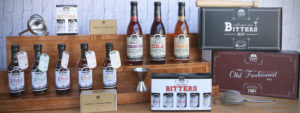
The Hella lineup.
The Hella lineup.

It is also the story of three friends with entrepreneurial skills and passion who, with the help of Kickstarter, started a business and making quite an impact. Just like the bitters they make, their diverse and eclectic backgrounds merge very nicely to create an outstanding product and a company with vision and values.

I met the team at the suggestion of my friend Sean O’Rourke from Fedway Distributors in NJ. Sean is the Craft Category Manager, a rising star at Fedway, and someone with first hand knowledge about craft and startup ventures. With his recommendation in mind I set off to Long Island City, Queens to meet the owners.

The Team

Jomaree Pinkard is the CEO, a Wharton MBA with over a decade of experience in the consulting and financial industries. Eddie Simeon is the CMO, a senior digital strategist and former Adweek executive with experience in commercial media development. Tobin Ludwig is the COO and an F&B industry veteran, a James Beard House featured craft bartender, educator and beverage consultant.

Jomaree, Eddie, and Tobin

The partners came together at various times in their lives as friends and business associates. Among other things, they shared a passion for food and do-it-yourself culinary efforts, including making their own bitters as a hobby. So, they made a batch of bitters, and friends and family loved it. So much so, that to meet the demand they went on Kickstarter and raised two and a half times what they had wanted.

Bitters

Let’s spend a minute on the topic of bitters. Here is a succinct history.

To cut to the chase, as they say, bitters have been around for centuries and ultimately found their way to become various types of medicines derived from plants or other types of natural resources. By the 19th century, the British and Colonial Americans added bitters to Canary wine (wines from the Canary Islands). From there they went to cocktails and to oblivion, thanks to prohibition. By the beginning of this century, they were back with a vengeance, and have become the backbone of most, if not all, cocktails. (See an earlier post on Gary Regan and his Orange Bitters No. 6.)

Why do I admire these guys?

Simple. They’re smart business people who understand that, in the craft world, “build it and they will come” just doesn’t work. They understand growth constraints, have developed business plans and strategies, and are outstanding marketers.

Bitters are a slow usage category with only a few drops used in a cocktail. My bottles of Angostura and Regan’s No. 6 Orange Bitters have been in my pantry since Methuselah was a teenager. (Sorry, I couldn’t resist an old expression.) So if you’re manufacturing bitters, there are limits to your growth and expansion.

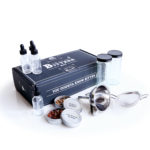
What the Hella guys have done is produce a line of bitters—orange, aromatic, ginger, smoked chili, and ginger lemon. In addition, they recognize that bitters are of appeal to home chefs and do-it-yourselfers so they produced a Craft Your Own Bitters Kit. (I’m a proud owner of one of those kits and as you read this, my first batch of grapefruit bitters is aging.)
Other Products

Let’s start with cocktail syrups. These are also syrups used by many home bar chefs designed to help make cocktail mixing at home effortless and fun. These syrups make it easy to produce drinks at home that taste on par with what you will find in fancy cocktail bars. Hella makes three—hibiscus, cola, and tonic.

Here’s how they describe it:

Hella Cocktail Syrups are different than what you’re used to, and that’s just the way we like it. We wanted them to embody everything that Hella stands for so we made sure to use only the best all-natural ingredients, combined with just the right amount of cane sugar. Our 72-hour infusion of bark, fruit peel, and whole spices result in not too sweet and perfectly bitter syrups that make an excellent dry soda or a light and refreshing mixed drink or cocktail.

Another line of products includes Hella cocktail mixers—five in all, including Bloody Mary, Margarita, and Moscow Mule. I haven’t had a chance to try them as yet, but friends who have rave about them and think they’re among the best on the market.

Distribution and Sales

Here’s the part I really love.

While bitters generally contain high levels of alcohol, often 90°, in many states they are not considered an alcohol product, so you can buy them in grocery stores. They are also available in liquor stores. So distributors and retailers in both worlds are available to them.

In fact, check out the list ’A’ of retailers (in NYC): Williams Sonoma, Whole Foods, Chelsea Market, Whisk, Astor Wine and Spirits, to name a few.

Where to next?

They are not saying, so I feel free to speculate and perhaps offer an idea or two.

Based on the quality of their products, the commitment to excellence, and their entrepreneurial savvy, I hope they move from the margins of the booze business into the mainstream. My instinct tells me that if they were to add spirits to their mixers, the result would be a top shelf pre-mixed cocktail. Or, if they applied their creativity, they might come up with a proprietary spirits product that would make for an excellent cocktail.

But then again, these folks are smart. They know that focus is the key ingredient for an entrepreneurial success.

Incidentally, the name Hella comes from a popular expression—hella—as in a slang term meaning “very” or “extreme.”  So Hella products can mean hella awesome or hella great. In old school slang, we used the term “helluva,” as in they make “helluva bitters.” Either way the term is appropriate for their products.

By the way, I’ll let you know how my do-it-yourself bitters product turns out. Check the Booze Business Facebook page https://www.facebook.com/boozebusiness/
strain-funnel_web_2x1

Leave A Comment

Malfy Gin

Your views on gin are about to change

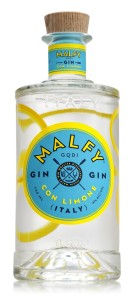
I’ve always found gin to be a fascinating category. While some will tell you that gin is really flavored vodka, don’t Malfy_Bottle_Fbelieve them. From my standpoint, flavored vodkas are based on added flavorings that, while not artificial, often taste that way to me. Gin is made with juniper berries, of course, and other botanicals as part of the distillation process. Some gins fall into the citrus camp but most use exotic spices and herbs.

What also make the category fascinating to me are the attitudes and opinions drinkers have about gin. Here are the five things I’ve heard most about gin.

1. Not everybody likes gin

Many of the consumers I’ve spoken with over the years seem to have a love or hate relationship with gin. The haters will tell you that they dislike the taste and blame it on the juniper and, as some have told me, those awful botanicals.

2. There are vodka drinkers and there are gin drinkers and neither the twain shall meet

3. The origin of gin is widely and strongly believed to have originated in the Netherlands with Great Britain playing the major role in its growth over the years.

4. Gin is to be either consumed in a cocktail or with tonic, and never on the rocks.

5. Gin as a category is not growing.

So, with these beliefs and opinions in mind, let’s take a close look at Malfy Gin.

An Unusual Gin from Italy

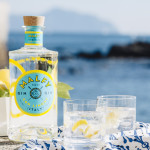
14770953_lIf you’ve ever been to the Amalfi Coast of Italy, you know about the beautiful scenery, the great food and those amazing lemons. Those lemons are at the core of Malfy Gin.

The Vergnano family distills Malfy Gin in a family run distillery in Moncalieri, Italy.  Although the spirit is infused with Italian juniper and five other botanicals it is the infusion of the famous Italian Coastal lemons, that give Malfy Gin it’s unusually fresh and zesty aroma. It clearly is not a traditional, juniper-heavy gin.

The gin is imported by Biggar & Leith (more about them in a moment) and is the “first luxury Italian gin” in the 12477426_lUSA. In fact the product carries the GQDI™ designation, which stands for Gin di Qualità Distillato in Italia.

Not only is the gin from Italy, but according to Biggar & Leith, “We were researching the history of gin – and there it was, staring us in the face; gin was invented in Italy – long before the British or Dutch.” I have found other references to Italy as the birthplace of gin, including here and here.

In addition, I emailed Gary (gaz) Regan (The Bartender’s Gin Compendium, The Joy of Mixology, The Negroni and more) and asked him about the origin of gin and Italy. He tends to agree and points out that the distillation of beverage alcohol began at the University of Salerno, Italy, circa 1050 – 1150, and juniper grows in abundance in that area. Since monks/students were seeking the “water of life,” it makes sense that they would add herbs to their distillates, so a juniper infused spirit would also makes sense.

The Product

Malfy Enjoying the ViewI found Malfy Gin Con Limone to be delicious, versatile and appealing to both gin drinkers and those who are not regular consumers in that category. I’m partial to Negronis and they refer to the Malfy version as the real Negroni—Italian gin, Italian vermouth and, of course, Campari. The Gin & Tonic was extraordinary with the prominent lemon taste and especially when enhanced by a slice of lemon (Italian, Meyer or California).

I also think that Malfy on the rocks was the most enjoyable way to appreciate the taste. Who says gin is only for cocktails?

Oh, and vodka fans I asked to try Malfy, enjoyed it very much. A crossover product, whereby vodka lovers enjoy gin? What is this world coming to?

About Biggar & Leith

Elwyn picThe company was founded by Elwyn Gladstone, a well-known spirits industry executive, most recently head of marketing at Proximo Spirits, and prior to that head of new brands at William Grant and Sons. Elwyn has been instrumental in the development and launch of such brands as Hendrick’s Gin, Sailor Jerry Rum, Kraken Rum, Stranahan’s Colorado Whiskey, and a host of others.

Here’s how he describes the company he founded and their first imported brand:

“Biggar & Leith owns a small portfolio of fine spirits from established, family-owned distilleries who are dedicated to innovation and quality. We search the globe for brands whose bottles transmit the personality and stories of the people who make them.”

The name Biggar & Leith comes from his great-great-great-great Grandfather, Thomas Gladstone. He left his home in Biggar, Scotland in 1746 for the port of Leith, near Edinburgh where he apprenticed and then started his own wine and spirits business. (It might also interest you to know that another ancestor of Elwyn’s is William Gladstone, the four time Prime Minister of Great Britain.)

If I know Elwyn, he’s already found the distillery and product that likely will come next.

The Score Card

I said at the outset that Malfy Gin would change your opinions and views about gin, so let’s tally the score.

1. While not everyone likes the taste of gin, I’ve found that gin rejecters, like Malfy. More than they thought they would.

2. The brand appeals to both vodka and gin drinkers.

3. The Dutch and the British may have made gin and genever famous, but I believe its origin was in Italy.

4. You can drink your gin any way you like, but I’ll have it on the rocks with a slice of citrus (usually grapefruit).

5. The gin category has two major components—domestic and imported. The former is declining. Across the board, small batch, crafted gins, both US made and imported are the growth engines for the category.

* * *

Malfy Gin sells for roughly $30 for a 750ML. It has only recently gone on sale so you might not be able to find it right away. But, trust me, you’re gonna love it.

I think my friend Elwyn Gladstone has a winner on his hands.

Leave A Comment

Spirits of the world: Mastiha from Greece

How a chewing gum became a liqueur

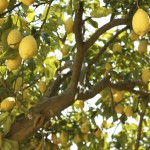
Mastika or Mastiha (‘mahs-Tee-ha’) is a liqueur from the Greek island of Chios that is flavored with a resin or sap from trees on the island. The word might sound familiar—it is derived from the Greek “to chew.” In English, it is ‘masticate’—meaning to chew or munch on.

Mastiha Trees
Mastiha Trees

It turns out that this resin/sap sheds its “tears” and became the original chewing gum

The resin or "gum"
The resin or “gum”

enjoyed as far back as the 5th Century BC, according to Difford’s Guide:

The ancient Greeks chewed mastic for fresh breath, as did the Romans, Byzantine Greeks and later the Venetians, Genoese and the Ottoman Turks.

The mastic gum is made into a liqueur that receives the “Protected Designation of Origin status on the island of Chios since it is the only place where the trees “cry teardrops” during harvest.

In Greece, Mastiha is served a number of ways: With appetizers, deserts or as a digestive. In the hands of the bar chef and mixologists, there are some terrific Mastiha cocktails being made around the world.

You can also buy the mastic gum itself on Amazon and there’s even a store called Mastihashop, where you can buy not only the gum but also other products made from Mastiha.

But if it’s okay with you, I’ll stick with the booze product.

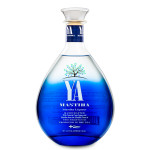
Ya Mastiha

Ya Mastiha
Ya Mastiha

Allow me to introduce Nicholas (Nick) Papanicolaou, a passionate entrepreneur and founder/owner of Ya Mastiha, which is derived from the Greek toast Yamas—“to our health.” Nick is a Greek-American who had one of those ‘aha’ moments, which led him to shift his entrepreneurial efforts to the Booze Business and introduce Ya. Here’s how it started:

Growing up Greek-American, I remember longing for my summers to spend a few weeks in the picturesque Greek Islands. Every year, I invited a friend to join me so I could share my heritage. In the summer of 2009, twenty-eight of my friends from all over the world joined me in Mykonos to celebrate my birthday. Despite vast differences in cultures, personalities and ages, we bonded with the help of one unifying force: Mastiha liqueur.

Like most startups, the brand faces many uphill challenges—limited resources (people and money), trade acceptance (distribution, bars, and stores), and building consumer awareness and trial. But like any tenacious businessperson, Nick is well equipped to roll with the punches.

The brand is only in New York, but can be purchased on YaMastiha.com/Buy where a retail partner will ship it to most states. It has some traction among Greek-Americans, for obvious reasons. I was surprised when he told me that a significant number of sales are in Tarpon Springs, Florida, which, I learned, is one of the largest concentrated communities of Greek-Americans in the U.S.

Entering the mainstream drinking market is among the list of challenges.

The product

Ya Mastiha is 30% AbV (60 proof) and made with natural cane sugar and Mastiha from the Chios Island in _MG_3737Greece. It’s produced in the U.S. but Nick has plans to also introduce a product produced in Greece.

The taste? Well, a bit unusual. I enjoyed it on the rocks and found it to be an excellent digestif. I don’t generally provide taste reviews but to me Ya has a slight Ouzo/anise aroma but doesn’t get milky over ice. What I really like about it is what it does to a cocktail. Difford’s has some interesting recipes like the Greek Martini (Mastiha, gin, dry vermouth and a touch of ouzo) or Smoky Tears (Mastiha, mezcal, pink grapefruit juice and simple syrup) or Cosmopolis Cocktail (a variation on the Cosmo with a splash of Mastiha added).

Ya Mastiha sells for $32.99 and you can buy it online here, here and through Craft Spirits Exchange.

It’s a fun product best shared with a group of friends. Plate smashing is optional.

Yamas!

(Dear Reader — If you come across an interesting spirit/liquor from around the world that is not widely known, contact me and tell me about it.)

Leave A Comment
1 5 6 7 8 9 23