You Don’t Have to be Jewish…

The Whisky Jewbilee Annual Event

For the past five years, Josh Hatton and Jason Johnstone-Yellin have been holding an event involving whisk(e)y tastings, education, and an overall fun evening. On June 15, at Studio 450, they will have their 2017 New York City show. (Other shows are in Chicago and Seattle.)

I’ve been intrigued with this event and set out to learn more about it by contacting Josh and talking to previous attendees and industry insiders.

Let’s start with their simple description from their website:

“The world famous Whisky Jewbilee is a nationwide parade of top-shelf spirits and fine kosher dining for whisky lovers of any faith.

I also learned that the Whisky Jewbilee is considered one of “the world’s top 10 whisky shows,” by The Spirits Business.”

Many of the people I spoke with told me previous shows have had huge turnouts and they consider the event to be top notch.

The Organizers

The Whisky Jewbilee is one of three businesses owned by the Jewish Whisky Company LLC, an umbrella organization that also owns two other companies—Whisky Geek Tours of Scotland and Single Cask Nation. The latter is an independent bottler that describes itself as follows:

Single Cask Nation began as a social fellowship or membership society organized around the right to purchase rare, fine single cask whiskies under the Single Cask Nation label.  More than a mere club, Single Cask Nation represents a unique virtual community in which members share a common affinity for the quality whiskies and other spirits of the world.

The idea is as old as scotch whisky itself. Johnnie Walker, Chivas Brothers and many others began as purveyors selling whisky from various distillers. Single Cask Nation has some interesting offerings. You might want to check it out.

Josh Hatton (L) and Jason Johnstone-Yellin (R)

The event—Jews and Booze

You might not realize it or never thought about the fact that members of the Jewish faith love whisk(e)y. A June 2013 NY times article, had this to say:

“Whiskey has numerous fan bases, but few are more devoted — and arguably less noticed by the press and public — than Jews, particularly observant Jews. Synagogues are increasingly organizing events around whiskey, and whiskey makers are reaching out to the Jewish market.”

In fact, many religious Jews wanted to attend Whisky Fest but could not because it’s held on Friday and Saturday nights. So, Whisky Jewbilee was launched in 2012 (on a Thursday night) with the blessing of the Whisky Fest people. It grew significantly over the years.

Today, the event will cap at 450 attendees and 80 companies/brands will be present with roughly 300 whisk(e)y SKUs (individual brands). But check this out—this is not a drinking event as much as it is a knowledge event and a one to one dialogue between producer and consumer. You won’t find beautiful people from central casting behind the tables or actors mindlessly spewing memorized lines. What you will find are whisky aficionados and well-informed representatives of the distilleries.

By the way, many marketers have told me that kosher consumers are very brand loyal. Perhaps more so than many other market segments.

About that Kosher thing…

I’m far from an expert on Judaica matters but I couldn’t help but wonder about what possibly could be in whisk(e)y that would violate the rules of kosher. So, I spoke with Josh about it and did some research.

What I learned is that there is nothing in whisk(e)y to make it non-kosher. Wine on the other hand, because of its sacramental use, has strict kosher rules. But with a few minor exceptions, nearly all whiskies are okay.

The organizers welcome all whiskies regardless of maturation style. This means that whiskies matured in sherry, port or other wine based casks are perfectly fine and will be present at Whisky Jewbilee. They believe all whisk(e)y to be kosher-by-nature unless the whisk(e)y is flavored. At their event, only the food is under kosher supervision.

The flavored whisky situation has to do with the fact that the flavorings used to augment the whiskey taste might contain non-kosher elements like glycerin. It would take certification to assure observant Jews that the glycerin is a vegetable rather than animal based oil.

But you will find some amazing whiskies there including some of my favorites from Brenne Whisky, Koval Distillery, FEW Spirits, and the best in the world, including—Bowmore, Glen Grant, Four Roses, Michter’s, High West, and many more.

~~~~~~~~~~~~~~~~~~

The organizers of the event have invited me to be there and part 2 of this article will be after June 15. If you attend, please look for me and say hi.

The Chicago Whisky Jewbilee will be on November 9 at Artifact Events. The Seattle show will be some time in February or March.

And, remember, you don’t have to be Jewish to attend. Just enjoy!

Leave A Comment

Napa or Sonoma: Which to Visit?

Perhaps Both

A number of friends and readers have asked me about which California Wine Country is most worth a vacation visit. I’ve gotten this question many times and since it persists year after year and this time struck close to home, I figured I ought to look into it further and write about it.

So, I contacted an internet buddy (what we used to call ‘pen pal’ back in the day) and asked him about it. What follows then, is a conversation between me and Mark Davis, the managing partner of Tango Tours.

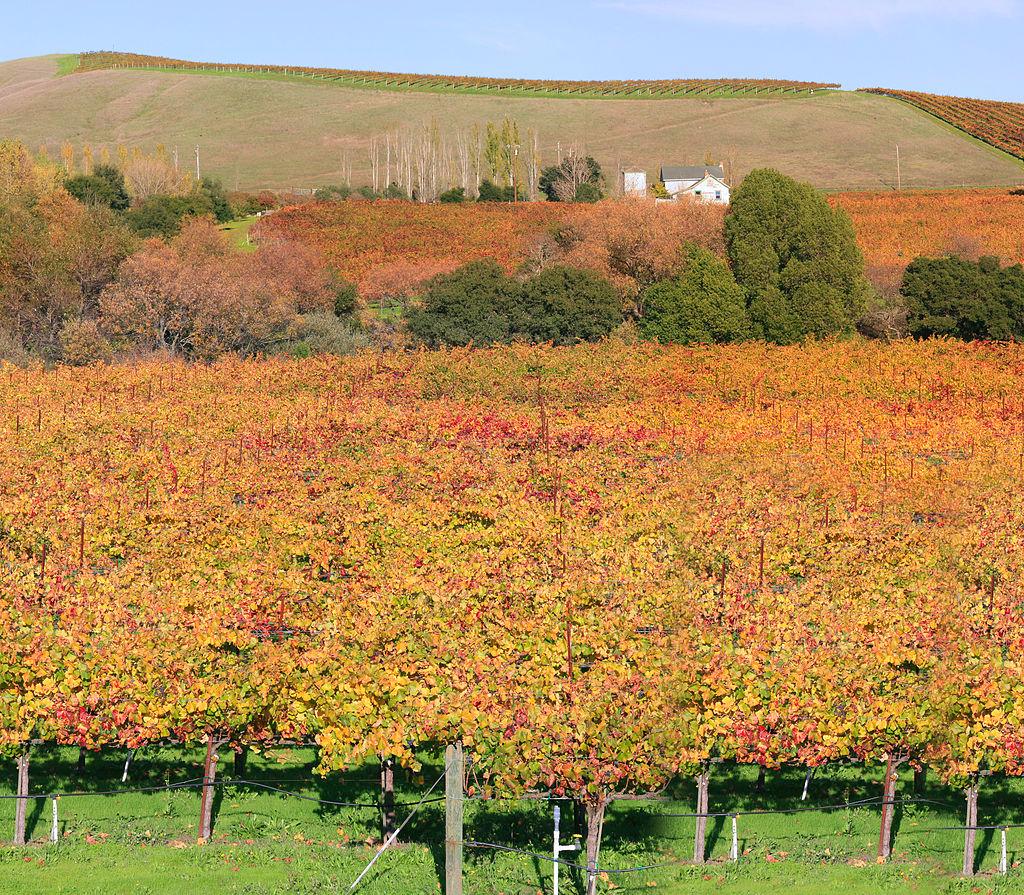
Photo Credit: Brocken Inaglory via Tango Tours

Tango Tours

Mark has been running the company since 2014 after 20 years in the travel industry. He was also in the Tango Trading Company which specialized in wines of Argentina. Tango Tours is a luxury travel company that offers exclusive culinary and wine experiences in Argentina, Chile and Napa Valley. Who better to ask than someone whose business is tourism and hospitality.

When I first posed the question of which one to visit in California, Mark pointed out that he loves both then went on to say, “If you have to choose between the two, the decision should be based on your preferences. The two have very distinct features, and you may prefer the qualities of one over the other.”

This interview is aimed at just that—the basic differences between Napa and Sonoma Valley so that you can make an informed decision.

Let’s start with some basic differences. What are they?

“Napa” may refer to the City of Napa or Napa County. “Napa Valley,” however, is the wine grape-growing region, which is an American Viticulture Area (AVA). When we make reference to “Napa Valley,” we mean the Napa Valley AVA, which includes 16 sub-AVAs, and over 400 wineries.

Likewise, “Sonoma” or Sonoma County may refer to the City of Sonoma, Healdsburg or Santa Rosa. Sonoma County includes 17 AVAs, including the Sonoma Valley AVA.

How are the wineries different?

Sonoma and Napa Valley have nearly the same number of wineries. However, the ones in Napa are a lot closer together than those in Sonoma, which are spread out throughout the region.

Napa Valley wineries exude the glitz and glamor of the American wine scene. The names of some Napa wineries even come up when talking about the best wineries in the world. At the famous, “Judgment of Paris” in 1976, two Napa Valley wines were rated the best in their respective categories, beating out their French counterparts.

Wine tastings can be pretty expensive in Napa, with the costs going up if the wines are served with food.

Sonoma Valley wineries, on the other hand, are much more laid-back and relaxed. Also, expect fewer crowds, and the prices to be much lower in Sonoma. The tasting fees tend to decrease as you get farther from the main roads.

And the wines themselves? How are they different?

Napa Valley mainly focuses on the production of different varieties of Cabernet Sauvignon and Bordeaux varietals, Chardonnay and Sauvignon Blanc. Of course Cabs and Chardonnays can be found in Sonoma Valley. But Sonoma Valley, on the other hand, produces everything from Charbono (also known as Douce noir) to Gewürztraminer, and from Pinot Noir to Zinfandel. So, if Cabs and Chardonnays are your thing, you may want to try a Napa Valley wine tour. But if you want a more varied wine tasting experience, head to Sonoma.

What about food?

Napa Valley has the highest per capita concentration of Michelin Starred restaurants of any wine-producing region in the world. Napa Valley focuses more on fine dining, with a large number of restaurants offering refined exotic dishes.

Yountville, a town in Napa, provides the biggest culinary punch of the region. In the city of Napa you can visit Oxbow Market, which is a covered market hall, to pick up some snacks, like freshly baked bread and cheese or herbs and olive oil. Or if you would like to have a picnic at a winery, try the Oakville Grocery or Dean & Deluca for sandwiches and prepared foods.

The culinary scene in Sonoma is quite different. However, it has its own unique standards in terms of food. The Shed in Sonoma Valley is the counterpart of Napa’s Oxbow Market. Sonoma also has a Michelin Starred restaurant in Forestville, which gives Yountville’s finest restaurants some tough competition.

However, while Napa is all about fine dining and celebrity chefs, Sonoma offers a simpler experience having most of the dishes prepared from seasonal ingredients.

Aside from eating and drinking, which are my two favorite pastimes, are there differences in what to see or do?

When it comes to activities, Napa Valley is far ahead of Sonoma. But that doesn’t mean you will find nothing to do in Sonoma other than wine tasting.

In Napa, there is the famous Wine Train that takes you on a ride around some of the County’s wineries and town centers. You can also go for a hot air balloon ride, or paddle in the Napa River.

Also, the Golden Haven Spa offers healing mud baths for visitors. The wine blending lessons at Conn Creek Vineyards, or the cooking classes at Whitehall Lane are also popular with visitors. As is shopping on the main street of St. Helena in Napa.

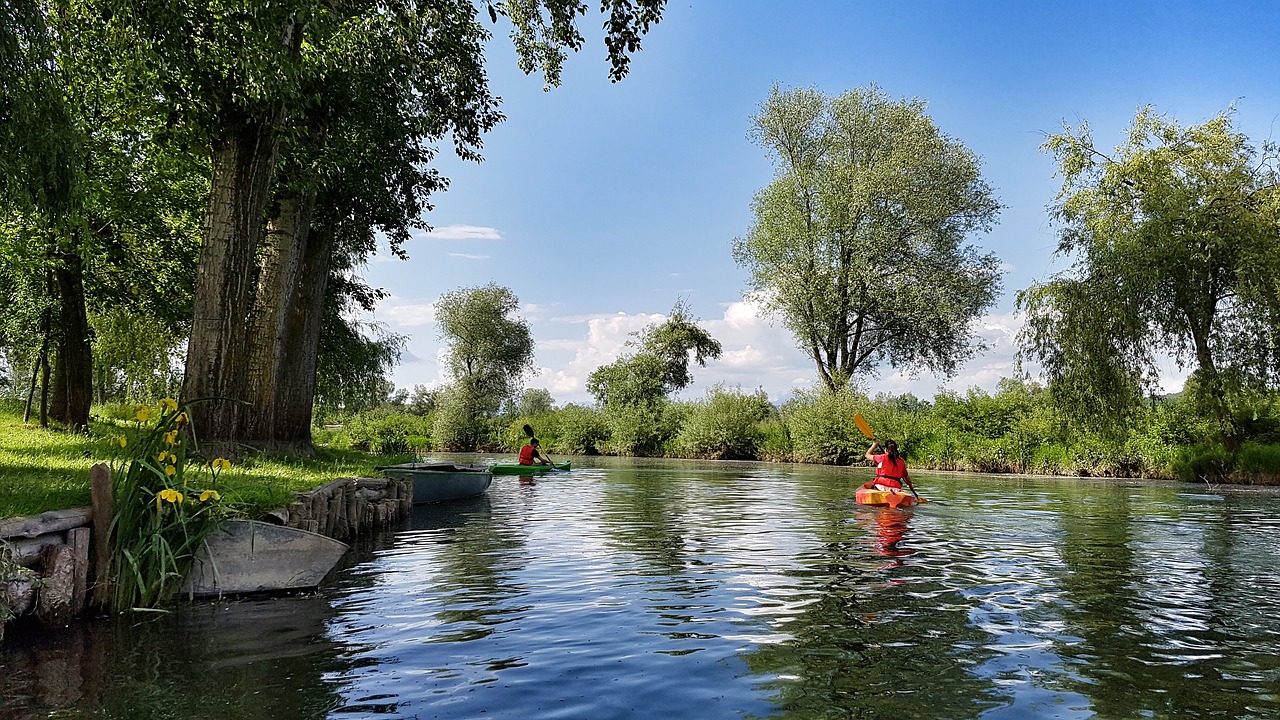
Sonoma also offers a number of outdoor activities, like navigating the county’s waterways in kayaks, attend cooking parties, zip line or hiking through the Armstrong Redwoods Reserve. You can also spend a day at Safari West seeing African animals.

Despite these attractions, Sonoma is a lot quieter than Napa, which is always buzzing with activities.

If you want your wine tasting experience to be a grand adventure, and you’re ready to spend more, take a trip to Napa Valley.

If you’re looking for a more relaxed time, plan a trip to Sonoma. Also, since it is less expensive, you can spend more days in Sonoma Valley.

Thank you, Mark. You can reach Tango Tours here.

For more information about the differences between the two, you might want to visit Wine Folly.

Image Source: By traveldudes via Tango Tours
Leave A Comment

That S*it Will Never Sell

A fascinating book on innovation in the alcohol industry

David Gluckman has spent 45 years in the drinks industry (the British phrase for the Booze Business) creating such outstanding products as Bailey’s Irish Cream (along with Tom Jago), Tanqueray Ten, Cîroc and scores of others. His book, whose title is the heading of this article, is a fascinating guide to what it takes to innovate and launch new products in this industry.

David was born in South Africa and came to the UK and began working in advertising. His accounts included such companies and brands as Procter & Gamble, Kerrygold butter, and several Unilever brands. In the late 1960s, he became a consultant to IDV (International Distillers and Vintners—a company that ultimately became Diageo), and entered the world of brand development.

As a new products/innovation toiler myself, I found the book to be captivating and a joyful ride on the sometimes-turbulent road of brand development.

A review by Paul Walsh (ex CEO of Diageo) put it nicely, “David Gluckman has a ‘one-of-a-kind’ approach to new brand development, but amazingly, it works. You will enjoy this book.”

I sat down (virtually) with David and asked him about his experiences.

You’ve spent most of your career on innovation and product development, what are the biggest obstacles you’ve encountered over the course of your career? Who are the innovation villains?

Somebody once asked me why we had such a high strike rate getting brands onto the market at IDV.  My answer “No marketing people.” No middle managers asking to see alternative ideas to go into massive research programmes.  I can’t imagine major players like Sidney Frank or Abe Rosenberg doing concept testing.  We had a very small team of like-minded individuals and the beauty was that we reported to top management.  I sold the idea of Smirnoff Black to Denis Malamatinas in under 10 minutes. And Aqua Libra to Tim Ambler in 5 minutes.  Well, that’s because I knew him better.

After leaving Diageo I did a project for a large drinks company.  The budget was huge and I worked in parallel with a global innovation giant.  I delivered my work a month ahead of schedule and I thought the solutions were really good.  I think it was a case of ‘budget allocated, budget spent, end of story’.  Nothing happened. I would be happy to go and re-pitch the ideas to the company tomorrow.  At no charge. I am confident the ideas would work.

Which companies (or individuals) that you’ve worked with were most welcoming or encouraging to new ideas?

IDV was a ‘one-and-only’ when it came to fostering new brand development.  Baileys took about 5 years to become significant and yet the company tolerated us (Tom Jago and me) even with the odd expensive failure. Adventure seemed to be built into the IDV culture.  When Jago left and Tim Ambler took over the rate of development accelerated.  I think of all the people I worked with, Tim was the most inspiring.  He really knew the business and he was on the main board and could make things happen.  IDV also formally introduced Tom Peters’ ‘brand champion’ idea so top management from all over the company were taking leadership on new ventures.

What’s the biggest regret of your career? What have you done or worked on that you wished you hadn’t?

When I parted company with Diageo in 2005 I got together with two ex-colleagues to develop Coole Swan, a super-premium cream liqueur.  The category made sense because there was nothing above Baileys and we felt there was an opportunity for a product with lower sweetness and more modern, sophisticated packaging which broke with the Baileys’ template. I was as proud of that brand as with any I developed for IDV/Diageo.  The problem for me personally was that it took me out of my comfort zone and into marketing and finance – not part of my skill set. I still firmly believe that it will be a great buy for a company out there with muscle and resources. But I should have negotiated a brand development fee and a small piece of the action and left it at that.

Thinking about all the new products or innovations you’ve worked on, which are you most proud and why?

It would be easy to say Baileys or Cîroc because they were so successful. But for me the two intellectual challenges which were most satisfying were Smirnoff Black and Distilled Guinness.  In the Smirnoff case, the brand was on its knees in the US.  The idea of a premium version to compete with Absolut and Stoli was scarcely credible. The solution came from a word more familiar in the brown spirits sector—we set out to achieve and perfected ‘the world’s smoothest vodka.’ And the product delivered. Hard-nosed New York 40-somethings really could taste the difference.  And even when I told them it was from Smirnoff they said they preferred it.

Distilled Guinness never got off the drawing board but the way the idea came together in my head was incredibly exciting. If you can have Jewish epiphanies, this was one. The discussion was about a Guinness Whiskey.  Should we take the brand into a new category?  On the surface, the only way was Irish and at the time (1998), Pernod-Ricard owned the market.  So, Guinness Irish Whiskey didn’t seem to make commercial sense.  Then out it popped.  The fruit of all those lengthy distillery visits.  Whisky starts life as a fermented product. A beer.  Then it’s distilled.  Why not simply distill Guinness? And call it that.  Distilled Guinness.  No SWA {Scotch Whisky Association}, no barrel-ageing, make it where you like and make it taste the way you choose.  We designed the pack the same evening and I was in a couple of focus groups a few days later. But it never happened.

What do you make of the craft (or small batch) product movement in the US and UK?

I never liked claims like ‘small batch’, ‘hand crafted’ which are all over the place these days. They are hollow claims, just hype. They don’t really mean anything.  I always liked brand claims that led to real benefits not stories. It was my advertising training working for Unilever and P&G.  Smirnoff Black was a palpably smoother vodka and Tanqueray Ten is made from fresh botanicals and has a fresher, cleaner gin taste. These are real product benefits. They could get drinkers to change their minds.

I’m not sure I agree with David on this last point inasmuch as the back story of a new brand must answer the trade’s question as to “why this and why now.” I think it’s the mix of what’s in the bottle together with the brand’s reason for being that often yields success.

~~~~~~~~~~~~~~~~~~~~

David Gluckman (L) and Joel Garner, a famous cricketer.

You can learn more about his book and buy a copy at this website.

It’s my second favorite book about the Booze Business. Can you guess which is the first? 😀

Leave A Comment