Spirits of the world: Mastiha from Greece

How a chewing gum became a liqueur

Mastika or Mastiha (‘mahs-Tee-ha’) is a liqueur from the Greek island of Chios that is flavored with a resin or sap from trees on the island. The word might sound familiar—it is derived from the Greek “to chew.” In English, it is ‘masticate’—meaning to chew or munch on.

Mastiha Trees
Mastiha Trees

It turns out that this resin/sap sheds its “tears” and became the original chewing gum
The resin or "gum"
The resin or “gum”

enjoyed as far back as the 5th Century BC, according to Difford’s Guide:

The ancient Greeks chewed mastic for fresh breath, as did the Romans, Byzantine Greeks and later the Venetians, Genoese and the Ottoman Turks.

The mastic gum is made into a liqueur that receives the “Protected Designation of Origin status on the island of Chios since it is the only place where the trees “cry teardrops” during harvest.

In Greece, Mastiha is served a number of ways: With appetizers, deserts or as a digestive. In the hands of the bar chef and mixologists, there are some terrific Mastiha cocktails being made around the world.

You can also buy the mastic gum itself on Amazon and there’s even a store called Mastihashop, where you can buy not only the gum but also other products made from Mastiha.

But if it’s okay with you, I’ll stick with the booze product.

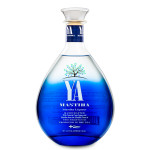
Ya Mastiha
Ya Mastiha
Ya Mastiha

Allow me to introduce Nicholas (Nick) Papanicolaou, a passionate entrepreneur and founder/owner of Ya Mastiha, which is derived from the Greek toast Yamas—“to our health.” Nick is a Greek-American who had one of those ‘aha’ moments, which led him to shift his entrepreneurial efforts to the Booze Business and introduce Ya. Here’s how it started:

Growing up Greek-American, I remember longing for my summers to spend a few weeks in the picturesque Greek Islands. Every year, I invited a friend to join me so I could share my heritage. In the summer of 2009, twenty-eight of my friends from all over the world joined me in Mykonos to celebrate my birthday. Despite vast differences in cultures, personalities and ages, we bonded with the help of one unifying force: Mastiha liqueur.

Like most startups, the brand faces many uphill challenges—limited resources (people and money), trade acceptance (distribution, bars, and stores), and building consumer awareness and trial. But like any tenacious businessperson, Nick is well equipped to roll with the punches.

The brand is only in New York, but can be purchased on YaMastiha.com/Buy where a retail partner will ship it to most states. It has some traction among Greek-Americans, for obvious reasons. I was surprised when he told me that a significant number of sales are in Tarpon Springs, Florida, which, I learned, is one of the largest concentrated communities of Greek-Americans in the U.S.

Entering the mainstream drinking market is among the list of challenges.

The product

Ya Mastiha is 30% AbV (60 proof) and made with natural cane sugar and Mastiha from the Chios Island in _MG_3737Greece. It’s produced in the U.S. but Nick has plans to also introduce a product produced in Greece.
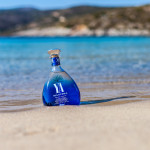
The taste? Well, a bit unusual. I enjoyed it on the rocks and found it to be an excellent digestif. I don’t generally provide taste reviews but to me Ya has a slight Ouzo/anise aroma but doesn’t get milky over ice. What I really like about it is what it does to a cocktail. Difford’s has some interesting recipes like the Greek Martini (Mastiha, gin, dry vermouth and a touch of ouzo) or Smoky Tears (Mastiha, mezcal, pink grapefruit juice and simple syrup) or Cosmopolis Cocktail (a variation on the Cosmo with a splash of Mastiha added).

Ya Mastiha sells for $32.99 and you can buy it online here, here and through Craft Spirits Exchange.

It’s a fun product best shared with a group of friends. Plate smashing is optional.

Yamas!

(Dear Reader — If you come across an interesting spirit/liquor from around the world that is not widely known, contact me and tell me about it.)

Leave A Comment

The Bacardi Story: A Different View

An interview with Mr. Cynic

Bacardi announced this week that it is realigning its U.S. distribution network and joining Southern Wine & Spirits and Glazer’s. They are leaving more than 30 former distributors including RNDC, Charmer (now Breakthru Beverage), Young’s Market, and others.

The spirits and wine industry has been abuzz with press releases, interviews, and statements. Many in the business have done little work this week, instead spending time speculating on why this happened and what the implications might be.

Booze Business has spoken with many people throughout the industry and, aside from those employed by those involved, the reaction was pessimistic and negative. To capture this mood, we conducted an interview with an imaginary industry executive known as Mr. Cynic.

So, here is another side to the Bacardi story.

*          *          *

Booze Business: Mr. Cynic, let’s start with the basic question. Won’t this change in distributors, this consolidation, improve Bacardi’s standing in the market?

Mr. Cynic: Let me ask you a question. When was the last time you went into a bar or restaurant or even a hole-in-the-wall joint and Bacardi Rum or Grey Goose wasn’t there? What distribution problem are they correcting? Seems to me that the wholesaler network they’re leaving did a great job with their two leading hemorrhaging brands. It wasn’t their fault that the company couldn’t fix the problems. How are they going to get deeper penetration than they already have?

Booze Business: Well, they’re saying that they want to consolidate their wholesaler network and have one national entity.

Mr. Cynic: Sure. Dealing with one distributor makes it easier to poke your finger into one chest and demand sales increases than into thirty. Charmer and RNDC made their brands, including the stuff that was impossible to sell. They got screwed. What I don’t understand is how competing brands can be in the same house.

Booze Business: What they’re saying is the Southern-Glazer operation will have dedicated and incremental sales forces.

Mr. Cynic: So they are adding people. Tell me, what were these people doing until now? You mean they’re not getting the best and brightest? Or, are they moving their best people to work on Bacardi?

Booze Business: Come on, a larger and more powerful Southern and Glazer has got to benefit other brands they already handle.

Mr. Cynic: Are you kidding me, we can’t get their attention now.

Booze Business: Well, then aside from Bacardi, will anyone benefit from this change?

Mr. Cynic: I’ll tell you this… there’s a lot of nervous sales reps on the street. But, my money is on the distributors who are losing Bacardi.

Booze Business: Why’s that?

Mr. Cynic: Hell hath no fury like a distributor scorned. This move ignores the consumer and the changing industry. It’s no longer about dinosaur brands like Bacardi Rum or yesterday’s vodka. The industry has become more grassroots focused and this move is old-old school. The distributors they dropped just got a wakeup call. They’ll focus on the new crop of brands.

Booze Business: So who benefits?

Mr. Cynic: Don’t you get it? The winning brands these days didn’t come from the large traditional powerhouse suppliers. They came from consumers—mainly Millennials—with brands like Fireball, Rumchata, and Tito’s. Brands made with “pull” not distributor “push.” These distributors, if they’re as smart as I think they are, will start asking themselves, “Where else can we make money?”

Booze Business: And the answer?

Mr. Cynic: Make the second tier brands stronger and more available. Focus on craft and startups. Take some risks. Change the business model. Give the consumer what they want not what the supplier and wholesalers want.

Booze Business: But won’t this new alignment mean Bacardi will do better with startup brands?

Mr. Cynic: Give me a break. The first order of business will be to manage the consolidation—legal, logistical, resources, etc.—then they need to show the owners that this was a smart move and start making money. The smaller brands… the brands of the future? Forget about it.

Booze Business: What do you think was the most important driving force behind the change?

Mr. Cynic: You want to hear cynical? Can you handle it?

Booze Business: Go on.

Mr. Cynical: Over the last 10 years or so—no, make that ever since I’ve been in this business—Bacardi has changed executives and management more than any other major player.

Booze Business: So what?

Mr. Cynical: This move will take time for the dust to settle. They say one to three years. Ha! This year and part of next will be focused on consolidation. The following year will be better because they’ll be going against soft numbers. Then maybe further growth down the road. Meanwhile the owners will be pleased, and management will have 3 to 4 years of job security. That is, until it all catches up with them. Brilliant move. Better job and income protection than a series of line extensions. Meanwhile, the brands at the other distributors will have real and steady growth.

Booze Business: Why do you think this happened?

Mr. Cynical: Who knows? Maybe it’s as they say, consolidation and one giant footprint will benefit Bacardi. Or, maybe, desperate times call for desperate measures.

Booze Business: Care to sum it up?

Mr. Cynical: Yeah. This deal will cost tons of money to make it happen. And, while they’re focusing on winning, it will create opportunities for the rest of the industry. While Bacardi and their new distributors are concentrating on their new arrangement, everyone else will be moving in a new direction.

Booze Business: Thanks for your time, and a word of advice.

Mr. Cynical: What?

Booze Business: Stay out of Southern Florida.

Leave A Comment

Cops and Robbers

A most unusual brand-building agency

In my last posting about Bom Bom, an exciting new product in the cream liqueur category, I mentioned Cops and Robbers as the agency that developed the concept, branding and product strategy.

The agency name is a playful approach to duality and a kind of yin yang thinking whereby two opposite and conflicting forces are actually connected. In the case of Cops and Robbers the duality is the balance between insights and creativity, between strategy and creativity. It also reflects the two founders, Patricia Verdolino and Richie Beretta, who come at branding projects from different standpoints but whose output becomes a sharp strategic blend.

image-1Born and raised in Queens, New York, Patricia and Richie studied design, but most of their influences, inspiration, and approach to working with brands come from a combination of their cultural and musical backgrounds. They met when Patricia was a vocalist in the Metro Stylee group (I bet you’re gonna Google it) and Richie was a producer. Turns out they grew up in the same neighborhood.

Richie is still very much involved in music and he is the design and creativity side of the practice. Patricia is the strategic, insights and innovation side. She has worked at a number of well known and high profile agencies such as Landor, Future Brands, and Anomaly.

What makes them special?

When I was first introduced to them, they had done some work for a leading beverage company and my friend there described them as particularly unique at translating insights into strategies and action. She went on to say, “They understand the consumer and culture better than the large bureaucratic agencies and translate this understanding into innovation…true innovation, not copy cat.”

Here’s how they put it on their website:

Tired of being handcuffed to traditional agency models and deliverables they have formed Cops & Robbers, a multidisciplinary agency that’s part think tank part creative studio where collaboration, music, art, strategy, production, and design seamlessly merge for fully integrated brand solutions.

The Bom Bom Case Study

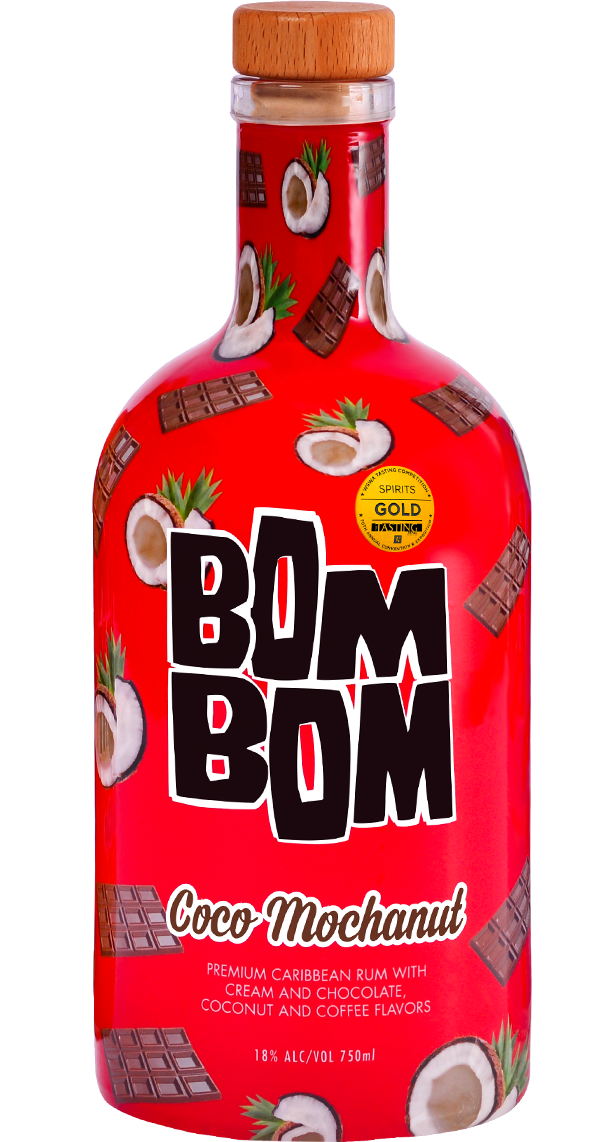
Kevin Mowers (founder of Liquid Innovations and Bom Bom) had an incredible cream liqueur that, in his view and others, coco-mochanutwas superior to Rumchata and Bailey’s. So check the box marked the liquid is great. But, who is the target market? What’s the brand? How do we appeal to them? What packaging should be used?

Cops and Robbers were given the brand development assignment and went about it in both a traditional and unorthodox manner.

They identified the millennial consumer but focused in on the 21 to 31 year old women. More than that, based on their insight work, they sharpened the focus on a particular segment of that group with a definable set of cultural and life style values. From what I’ve seen (and in the spirit of confidentiality) all I can say is they more than painted a picture of these consumers – they all but came alive in their presentation. Insightful, clear, and concise.

When they focused in on Bom Bom they covered the brand’s territory in terms of community, motivation, occasion, brand ‘friends,’ signature drink, flavor profile, motto and inspiration. The result was more than a roadmap; it was a travel guide.

Inspiration
Inspiration

The inspiration aspect is worth focusing on. Some people have looked at the Bom Bom packaging and told me either they “don’t get it” or “I’m not sure about it.” But hold on. If one of the consumer calls to action is to “release your inner kid,” then this works well.

Further, the design inspiration came from the contemporary fashion look inspired by Jeremy Scott, Pharrell Williams (BBC Ice Cream) and Moschino. It’s designed with the target audience in mind.

With the permission of Cops and Robbers, here is an excerpt from their presentation that sums up the brand and it’s marketing components:

BOM BOM is a part of a shift in spirits that’s not ashamed to break the serious rules of the game and just have some adult fun. Yeah, maybe that means acting irreverent like an anti-grown up and accepting that you really don’t give a (bleep) anyway. Boring is the enemy. BOM BOM is the cure.

Keep your eye on Bom Bom when it enters the market in early 2016. And, for that matter also keep your eye on Cops and Robbers. They are both going places.

Leave A Comment