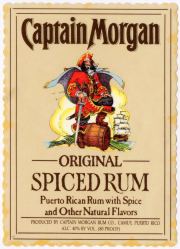
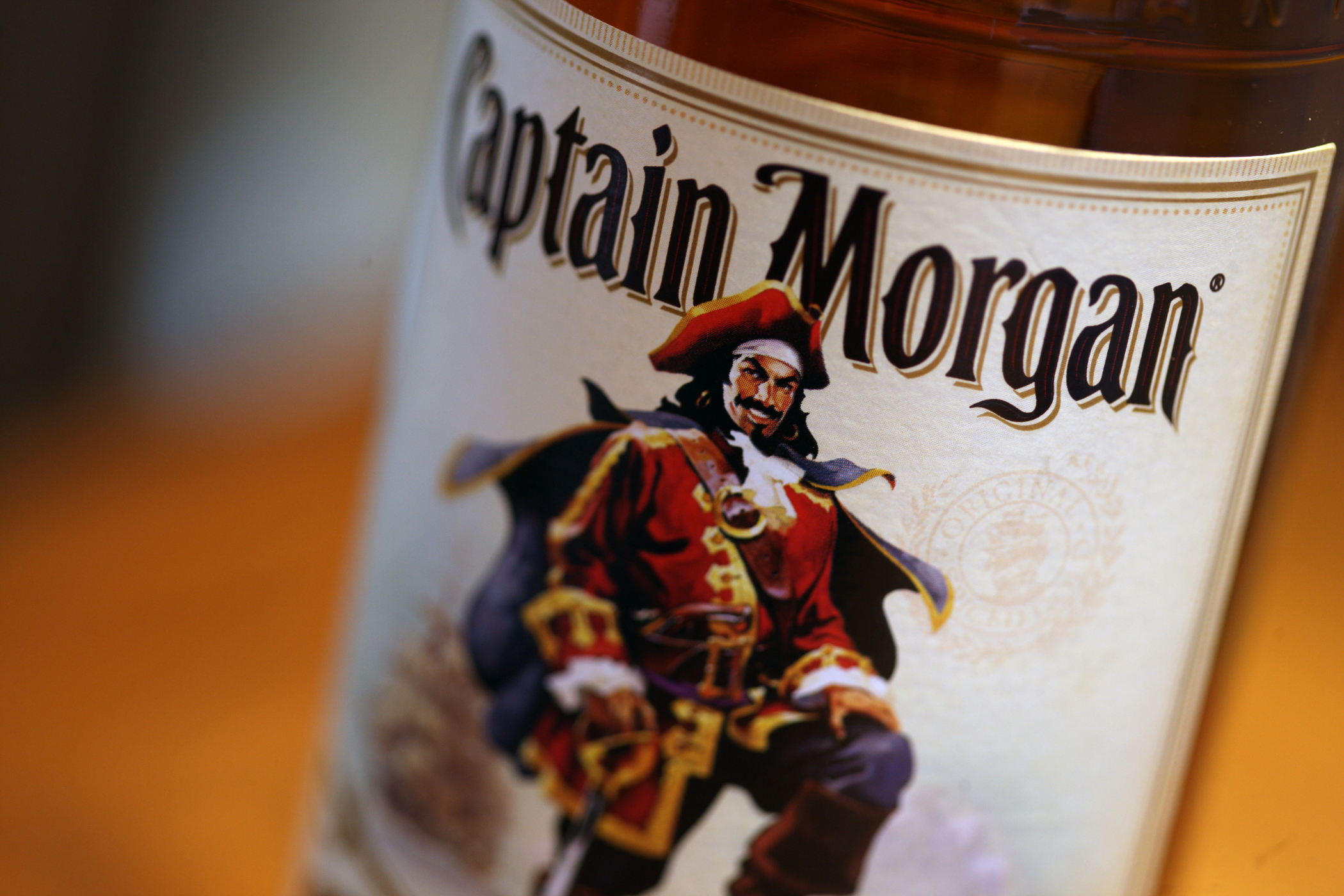
Lots of different labels over the years. Note the prominence of Puerto Rico as the origin of the rum.
Booze Business is about to become five years old and throughout that time, no story or posting has elicited as much comment as last week. From emails to comments to the Booze Business Facebook Page to LinkedIn, the story has generated interest, memories and opinions.
Some of the feedback pointed out a few aspects that I missed. So, here are some additional elements to the story.
The People Behind the Brand
I referenced Alan Feldman and Sam Ellias, partly because of their role in launching the brand and partly because of the insights they provided when I interviewed them. But I didn’t set out to provide a list of all those who made it happen in the beginning. The story was about all the people at Calvert who defied the odds and overcame the negative expectation to make this brand happen.
If I had set out to provide awards or recognition, I certainly would have mentioned Marty Bart and Shelly Katz who ran the company and its sales team. For that matter, I should have mentioned, by name, all the people who worked long and hard in bars and stores. But this was about people collectively rising to an event.
The Legal Aspect
Before Captain Morgan came along the designation for such products by the BATF (the regulatory body at the time) required that if a brand was not “Rum” it had to be designated “Rum Liqueur” or “Flavored Rum.” The development team insisted that the legal folks push the BATF with the “Spiced” designation and to everyone’s surprise it went through. That designation, “Captain Morgan Original Spiced Rum”, meant that the flavor description could be used in place of “Flavored.”
Had the new products team backed away, the allure of “Spiced” would not have happened and Captain Morgan would have gone to the Seagram new products graveyard. To their credit, the legal department, despite their misgivings, agreed to try and the rest is history.
So, add interdisciplinary teamwork to the mix.
Peach
I left out an important subplot from the early days of Captain Morgan – a line extension that failed.
Along about the mid 1980s, a new cocktail emerged that swept the country. It was called the Fuzzy Navel and was invented by Ray Foley, a world-class bartender and founder of Bartender Magazine. The key ingredient was DeKuyper Peachtree Schnapps. By about 1985/6 the suggestion was made by the owner to introduce Captain Morgan Peach Rum to capitalize on the Fuzzy Navel phenomenon. Bad idea.
Here was this swashbuckling, rogue pirate who came to life at drink nights in bars with trinkets (plunder) and his famous Morganettes — attractive, sexy and charming. Would this character be seen drinking peach rum? Much less be the purveyor of such a product?
Nevertheless, the owner insisted that this line extension be introduced. I don’t know who it was, but someone mustered up enough courage to suggest a test market before national rollout. To his credit, the owner saw the wisdom in the suggestion and agreed.
Leaving the image issue aside, the product had formulation problems and curdled on shelves in at least one market, Indiana.
Good thing it failed. It meant that ridiculous line extensions could wait for the current owner.
Despite the problems the brand has encountered in recent years, Captain Morgan Original Spiced Rum changed the spirits industry in a number of ways. It was the first brand that managed to put a dent in the rum category powerhouse by the strategic use of flavoring. Further, the brand pioneered the important role of flavors, a phenomenon we take for granted today.
But it didn’t start out that way.
In the early 1980s, the new products group at Seagram was charged with filling gaps in the company’s portfolio. At the time, spirits sales were languishing in general and, unlike more recent times, whiskies were on the decline. So the gaps to be filled were in the so-called white goods arena with rum at the top of the list. The brands already in the stable were either price driven (Ron Rico) or weak and on life support (Palo Viejo). Myers’s rum, the upmarket brand, was (and still is) a small volume brand, limited to special occasion usage. In addition, the product is outside the traditional white, light rum taste profile.
Enter a consultant
The new products group engaged Kahn Associates, headed by Bernie Kahn, a former creative director at Grey. Mr. Kahn’s claim to fame was the slogan, Choosy Mom’s Choose Jif, a slogan that propelled the brand to number one in peanut butter.
The key issue behind the assignment: How do you go up against an 800-pound gorilla like Bacardi, which had an overwhelming share of the rum category?
Consequently, it was clear to everyone that the only viable pathway was a “value added” proposition. Unless you have a boatload of money to go “head to head” with a dominant market leader, go for an end run and outflank them. Even with a ton of marketing funding, taking on Bacardi was, more than likely, a losing proposition.
Based on the views of the new products people, insights from marketing research and the advice of Kahn Associates, it was decided that the new rum entry would be a flavored product.
But, what flavor and what to call it?
The flavor decision
While there is some ambivalence about how the decision to go with spice came about, it was clear that two hurdles needed to be overcome. First, since the vast majority of rum drinks are mixed (and at the time, predominantly with cola), the flavor had to accommodate a mixed drink such as rum and coke. Second, flavoring and tastes can be polarizing (love it or hate it), so the flavor to be chosen had to have the widest appeal.
The decision was reached to add vanilla and call it “Spiced Rum.” Vanilla and the other ingredients delivered a pleasant and desirable taste and the ubiquitous word “spiced” added mystery and avoided automatic rejection. Not only that, the word spiced allowed consumer to project what they thought it might taste like and the flavorings lived up to the promise. A winning formula was born.
Branding
Here is where Seagram’s corporate culture entered the picture. Everyone had an opinion and thought everyone else’s stank (to paraphrase an old, off-color expression). So the brand name fell into one of those corporate vicious cycles whereby a proposal goes round and round and no decision emerges. To compound matters, names that had broad management support turned out to be already trademarked and not available.
At last, someone realized that the company owned a brand in the UK called Captain Morgan. A star was born.
Who will manage it?
At the time, Seagram had four operating divisions handling the spirits business. They consisted of Seagram (Seagram named brands), General Wine and Spirits (the upmarket brands), Calvert (price and push brands) and Summit (the brand hospice). Both the Seagram and General Wine and Spirits divisions were out because they already had rums and there is no way a newborn brand could go to Summit.
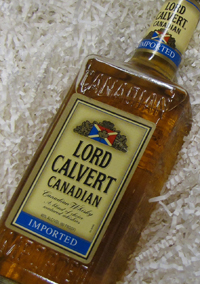
That left Calvert Distillers, the home of Calvert Gin, Lord Calvert Canadian, among others. (People at Seagram used to joke that Lord Calvert Canadian’s popularity was it’s square bottle. That meant it wouldn’t fall off the truck.)
Lord Calvert Canadian whiskey
In retrospect, putting Captain Morgan into Calvert was a gutsy decision. After all, the Calvert marketing and sales people were used to pushing their brands with little consumer pull and relied on pricing and point of sale promotions to move the goods. In fact, the people who worked at Calvert were looked down upon by others at the Seagram Corporation and were paid less than their counterparts at the other divisions.
Maybe putting the new brand into Calvert was a magnanimous gesture on the part of management, or maybe it was a plot to kill the brand, or even a cruel joke. But, I think that the single most important factor in the success of the brand, while at Seagram, was due to the Calvert people.
Success factors
So picture this… You’re a sales person at the Calvert Distillers Division of Seagram and, to put it bluntly, you’re viewed as the runt of the litter and always sucking hind tit. The brands you’re selling are a challenge, you’re making less money than your counterpart two floors above you in the same Seagram Building and, to quote Rodney Dangerfield, “You get no respect.”
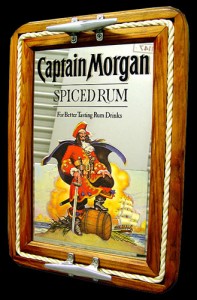
Suddenly, a new rum product falls in your lap. The product tastes great, there’s a story behind the branding and above all, it’s a fun brand with lots of room for promotion other than on the basis of price. There is the potential for great drink night promotion at bars (the Captain and the Morganettes) and outstanding retail POS items (see the mirror).
The Calvert people go to work with strong motivation, with zest and zeal and with something to prove to their colleagues in other divisions. Their
The famous Captain Morgan mirror
sales philosophy departed from the usual and, instead of loading up retailers, all initial orders were limited, thereby encouraging reorders. They went aggressively after sampling opportunities with drink nights and co-packing small sizes with Coke.
The rest is history. The test marketing (1982) was a huge success and by 1983 the brand went national.
The line extensions
By the early 1990s (under my watch), while the brand was a winner, there were some hurdles in the way of further growth. Captain Morgan was amber rum and the preponderance of consumption was light/clear. Further, Malibu had come on the scene with a coconut flavor. Above all, Bacardi gave up waiting for the brand to fail, woke up and came after us by introducing their version of spiced rum. Their proposition was that CM was for younger drinkers and their product was for the mature and serious rum aficionado.
The response was line and brand extensions with specific strategic roles. Each of the three extensions had an objective, which went beyond shelf space acquisition and copycat products. A silver version was introduced and replaced Captain Morgan Coconut, which was a feeble previous attempt to take on Malibu. Instead, that coconut product became Parrott Bay by Captain Morgan with it’s own imagery. Finally, Captain Morgan Private Stock was the upmarket entry designed to deal directly with the new Bacardi product.
Captain Morgan today
The overall Captain Morgan franchise, as managed by Diageo, is doing poorly. Their efforts seem to me to be all over the place with a range of line extensions that well, frankly, make little sense. Meanwhile, the base brand languishes.
From what I’ve seen, over the last ten years, Captain Morgan franchise grew at 3-4% compound annual growth rate but in the past five years it’s been flat to down. Further, the overall growth has been a function of line extensions at the expense of Original Spiced.
In fairness to Diageo, the marketplace has changed appreciably. There are a number of spiced rum brands and a few powerhouse new players, including Sailor Jerry and Kraken. Both these brands have strong taste profiles and imagery in tune with today’s drinker.
Yet, if you go to the Captain Morgan web page, you’ll find such peculiar and tactical line extensions like 100 proof, Black Spiced rum (a blatant Kraken lookalike), Lime Bite, Tattoo Spiced, Long Island Iced Tea and even plain old White Rum. Most of the line extensions (9 of them) appear to me to be declining and even hurting the original product. I’ve mentioned this a number of times on this blog – a line extension should feed the base brand, not eat it.
Perhaps Diageo should try to hire former Calvert people.
(I was not at Seagram when Captain Morgan was conceived and launched. So, I’m grateful to two people who were there and were kind enough to be interviewed for this posting. One is Alan Feldman who was in new products as the brand was born and who nurtured it in the beginning. The other is Sam Ellias, the first brand manager of Captain Morgan and the person widely recognized as the driver of its success in his Calvert Distiller days.)
(For other posting on Captain Morgan please use the search box at the top of this blog. Start with this one.)
I get this question all the time and the answers are really quite simple. At the top of the list, it’s easier to buy than build. Why invest the time and effort and divert attention from the existing portfolio just to dig a dry hole?
More important is the simple arithmetic throughout the food chain. “How am I going to make my bonus/meet management’s expectations/reach my sales quota – you fill in the rest – if I divert my attention to a start up brand?”
So, if you’re a major player, you have a number of options when it comes to new products and brands.
First, you can bite the bullet and say, as I did at the outset of this posting, why bother? Let someone else build it, I’ll make an offer they can’t refuse. Mainly Diageo, but also others, fit this mode.
If you’re aggressive and smart, chances are, you’re also attuned to the marketplace (consumers and trade) and know how to create demand or capitalize on an opportunity. Just look at White Rock, Proximo, Beam, Campari and others.