The True Story of How the Brand Got its Start
I’ve known Tom Bulleit since the 1990s and it was under my watch at Seagram that Bulleit Bourbon was developed and launched. Tom is a terrific guy, a real gentleman, and a smart businessman.

I saw some Impact Databank sales information the other day and among the top 10 super-premium bourbon brands, Bulleit is second only to Maker’s Mark in case sales at 1.2 million 9-liter cases (Maker’s is at 1.5 million), but Bulleit’s growth from 2016 to 2017 was 12.7% compared to maker’s 4.7%.
What’s even more impressive is that in 2000 Bulleit sold 180,000 cases while Maker’s Mark sold 1.4 million. At this rate of growth, it is likely that Bulleit Bourbon will surpass Maker’s as the leading selling brand.
So, the brand’s remarkable achievement has been the result of Diageo’s and Tom Bulleit’s efforts. Its launch and positioning in the bourbon market was due to the folks at Seagram.
Its start has always been an enigma to me and I set out recently to get the full story and to refresh my memory.
Let’s go Down Seagram Memory Lane
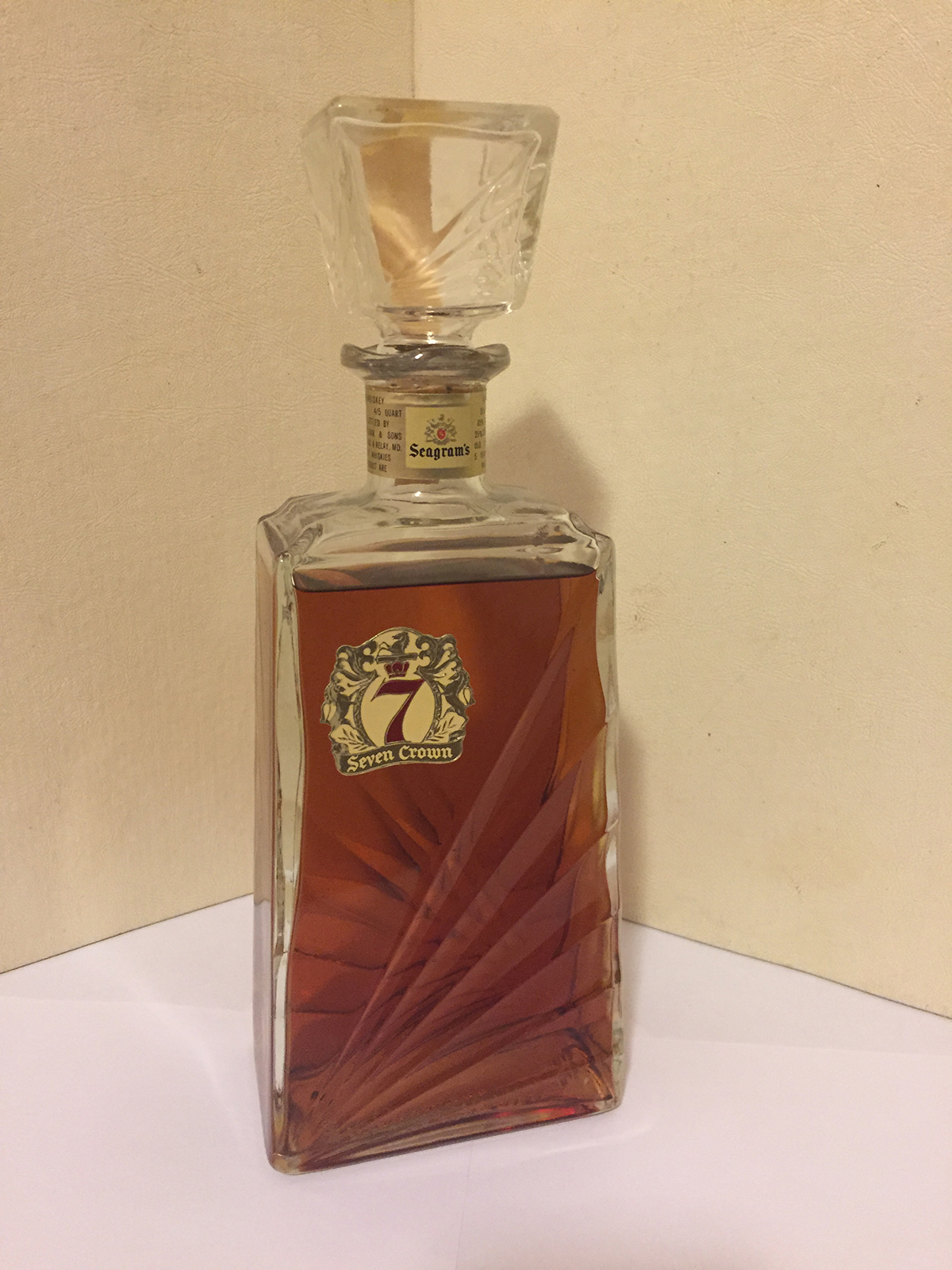
If you’ve read my book (forgive the shameless self-promotion), you know that Seagram was a whisk(e)y company in a world of vodka, tequila and other non-whiskey products. Starting in the early to mid 90s, the company acquired the distribution rights to Absolut, and at the same time, Captain Morgan and Crown Royal were growing by double digits each month. By the mid to late 1990s Seagram had consolidated its whisk(e)y portfolio to Canadian Whiskies (Crown Royal, VO and its line extension), Seagram 7 Crown, and Scotch brands (Chivas Regal, The Glenlivet, and other single malt whiskies).
All other whiskey brands were sold or let out to pasture. This Included such terrific brands as Weller, Benchmark and my current favorite, Eagle Rare. The sole exception that comes to mind is Four Roses, which was doing very well as a bourbon brand in Japan but languished as a blended American whiskey in the US.
The puzzle to me as I look back on it is, with the portfolio changing and growing and many whiskies being sold, why did Seagram want a fledgling bourbon with a pretty awful package (at the time)?
There’s another piece of the equation that may partially shed some light on this.
In 1995, Seagram bought 80 percent of the shares in entertainment conglomerate MCA Inc. for $8 billion. The company was now in a new business and Edgar Bronfman Jr. focused his attention there. As a result, the owner “overwatch” returned to Edgar M. Bronfman (the Chairman) assisted by John Bernbach, a long time Edgar Jr. friend, an advertising and media executive, and a Bronfman/Seagram advisor.
How Bulleit Came to Seagram
John played a crucial role. At dinner one night with an attorney friend from a prominent NYC law firm, John was told about Tom and the brand. He naturally assumed that since Seagram did not have a bourbon, Bulleit would make a strong addition to the overall portfolio. He brought the idea to both Edgar Jr. and the Chairman.
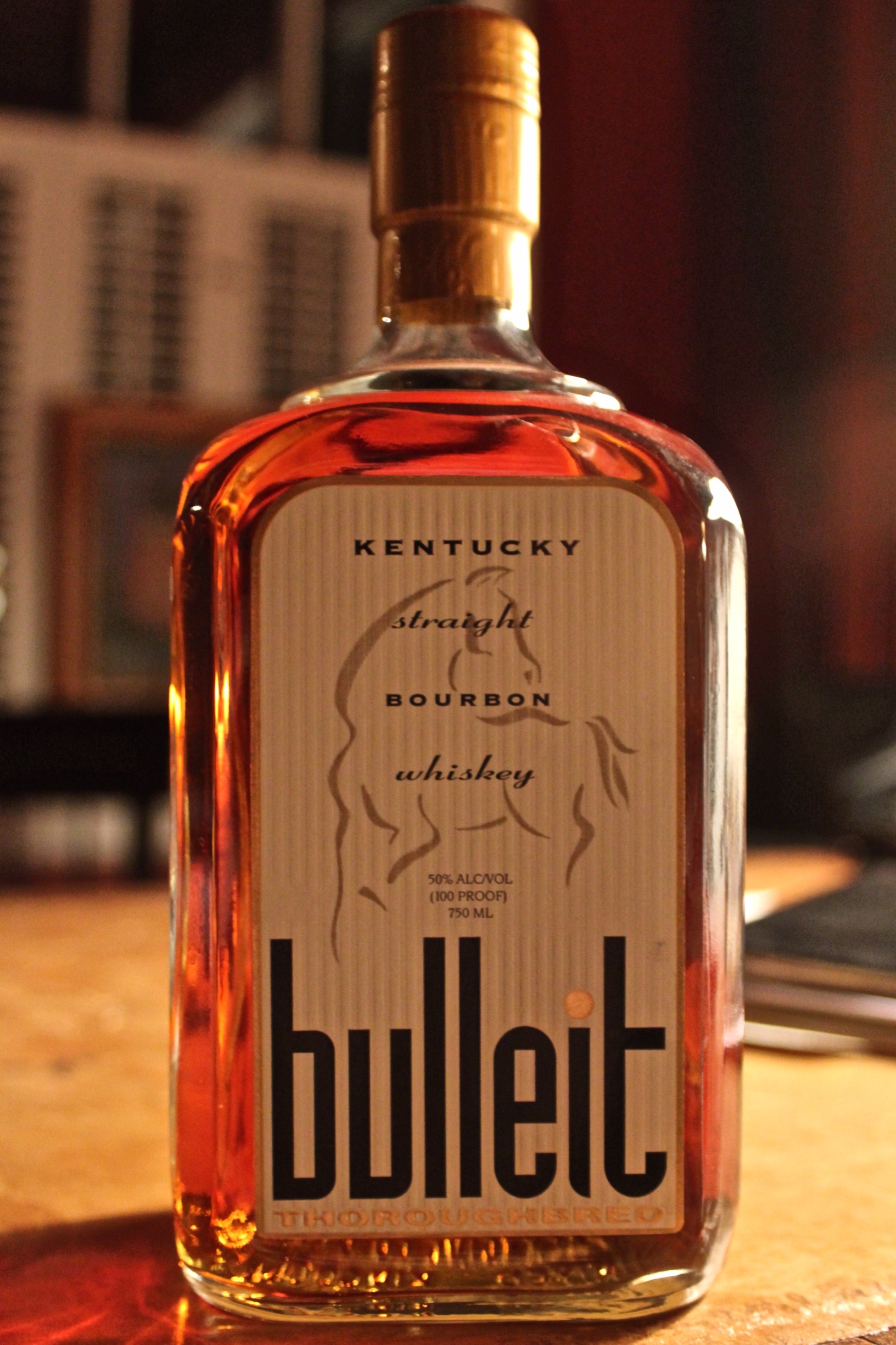
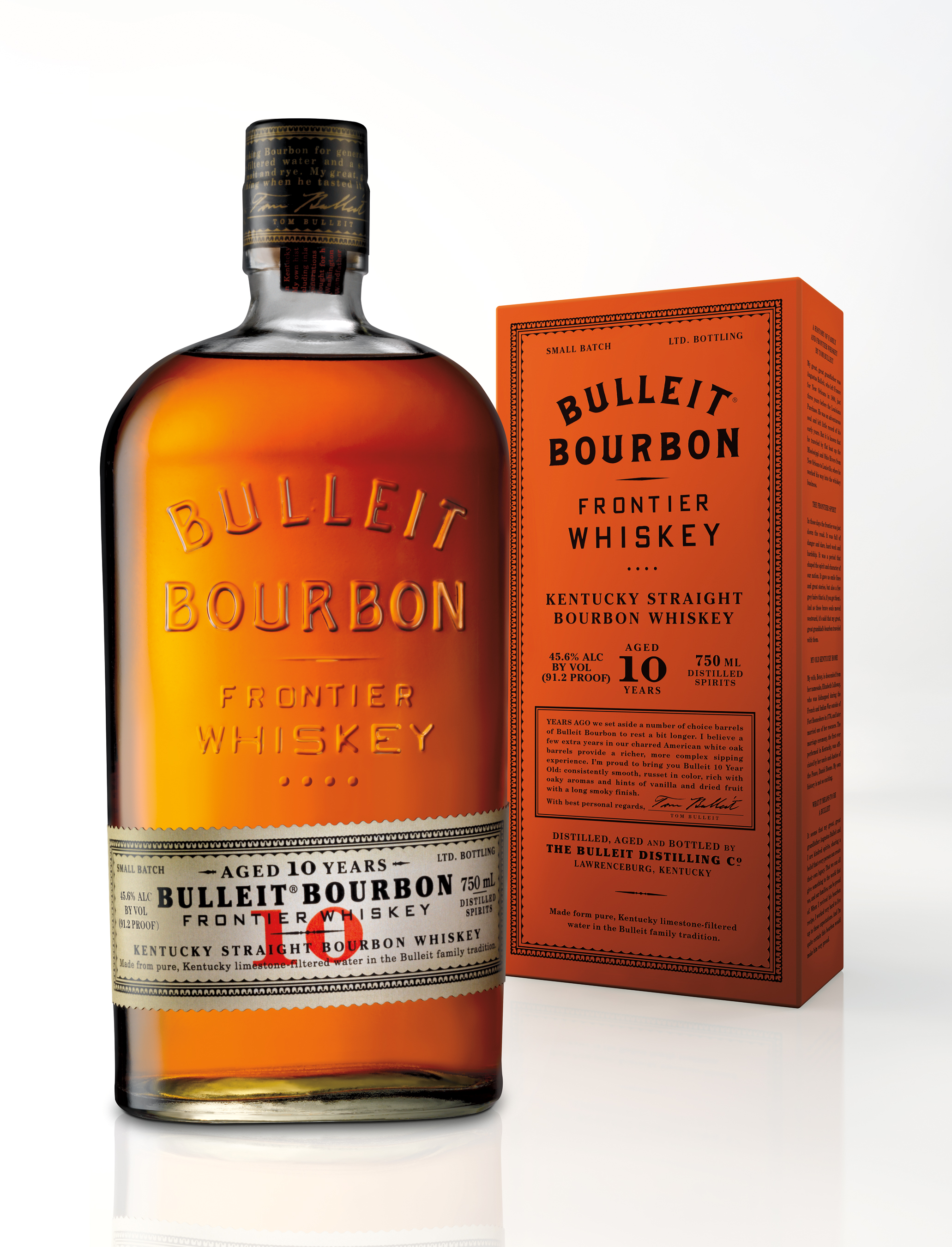
Both Bronfmans were said to have some reservations. The younger Bronfman was not happy with the packaging (see photo) while the Chairman had some reservations about the taste. But, both liked the idea of a bourbon in the House of Seagram.
But why? Bourbons had been removed from the fold, Crown Royal was on fire, Glenlivet and other single malts were doing nicely, and the company’s focus was on Absolut and the commitments to the Swedish owners.
There are lots of conjectures as to the answer. Perhaps Edgar Jr. was prescient and saw bourbon’s return as an opportunity. Maybe he wanted to show investors and the company that, despite the entertainment industry involvement, the spirits business was still top of mind. Conceivably the Chairman, now returned to the forefront of the booze business, was excited by the idea of a bourbon product that was outstanding.
My guess is that when John brought in his team (copywriter and art director), he showed the Bronfmans what the brand could become. Edgar Jr. in particular loved the work of these two gents.
Chuck Cowdery—writer, blogger, historian, marketer, and arguably the most knowledgeable bourbon maven on the planet—has written more than anyone about Bulleit. So, I’ll let him provide a brief history as reported on his blog:
Bulleit bourbon was launched in 1995, the brainchild of Tom Bulleit, a Kentucky lawyer who, through his legal work, learned a lot about the growing international market for American whiskey. He contracted with the Buffalo Trace Distillery in Frankfort, Kentucky, to make it. A few years later, he moved his operation over to Seagram. They created the current bottle and reformulated the product, moving its production to the Four Roses Distillery in Lawrenceburg, Kentucky.
Tom Bulleit
From the moment Tom walked through the door, and up to the closing of the Seagram door, Tom was a key player in the development of the brand. He worked with the production folks on the recipe, with the agency on the brand’s positioning, and with marketing/packaging on the look and message of Bulleit.
To me, this was a bit unusual. While Seagram often welcomed brand acquisitions, with the exception of Absolut, the attitude was often (to paraphrase) “thanks, we love your brand, here’s your check, we’ll take it from here, and here’s the door…” But, all of us from the Bronfman’s on down, welcomed Tom’s involvement.
There’s probably a couple of reasons for that, mainly due to Tom’s personality and approach—he’s smart, has the brand in his DNA, a team player, and overall terrific person to work with. Neil Gallo, who ran the day-to-day development of the brand, told to me recently that Tom would often say to Seagram folks something like, “here’s my suggestion, use it or not as you see fit.” His ideas were almost always accepted.
From my standpoint, I loved Tom’s “outsider” views and the way he interacted with our people.

The Bulleit Product
Whether there was a Bulleit Bourbon product on the market or otherwise available to be bought in the 19th Century, was irrelevant to us. Tom’s proposition was 1) the brand traced its origin to Augustus Bulleit (great-great-grandfather of Tom) and 2) with strong brand credentials, the brand could be a winner. We totally agreed.
The production folks were energized by the fact that they would be working on a new whiskey (a bourbon no less) and would be able to use the outstanding bourbon stocks they had. According to Art Peterson, who was VP of Quality Assurance and Technical Services, the team presented samples from mingling bond stocks from inventory. These went to Tom and the master distiller for approval. Ultimately, as was the case with all Seagram products, the final approval of the liquid came from the Chairman.
Tom, for his part, had his ancestors recipe in mind—a high rye content bourbon. What was produced was two-thirds corn and one-third rye. (The bourbon corn requirement is 51%). Today the brand’s recipe is very similar—68% corn, 28% rye, and 4% malted barley.
Here’s how the Bulleit website describes the product:
Inspired by his great-great-grandfather Augustus Bulleit, who made a high-rye whiskey between 1830-1860…
The Concept and the Packaging
John’s Bernbach’s team (with Tom and Neil’s involvement), came up with a simple yet powerful message. This isn’t just a bourbon, this is a Frontier Whiskey. A powerful slogan followed— “When men were men and whiskey was bourbon.” I loved it, approved it immediately then brought it to Edgar Jr. for his final okay.
The slogan is gone but the Frontier Whiskey is still prominent in the current Bulleit packaging.
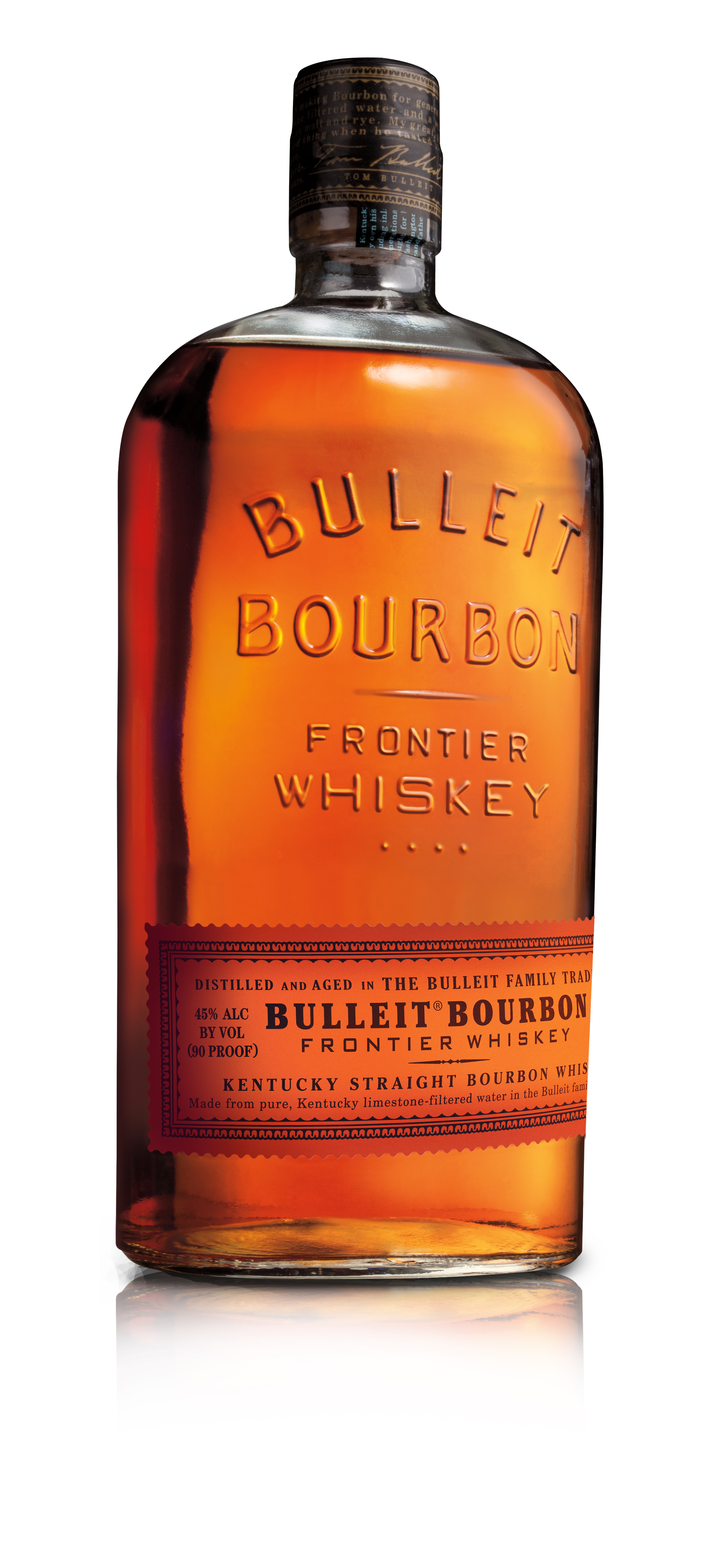
To me, the Bulleit packaging that was developed by Sandstrom Partners in Portland Oregon captured the concept perfectly. All the elements were there—a flask shaped, apothecary-like bottle, embossed branding, cork closure and, a minimal wraparound label that is slightly askew as though it was hand applied.
About that label… It was put on deliberately misaligned because it fit the imagery and positioning of the brand. It is part of the brand’s personality. However, in almost all operating committee meetings someone from production would invariably say something like this: “Great news Arthur, we fixed the label. It’s now perfectly straight.” This “great news” was always met with a groan and a request to leave it alone.
The Reactions
Not everyone in the organization loved or cared about Bulleit. Most of those in sales welcomed the brand since it had the backing of the owners or because they saw an opportunity in the bourbon business. At the same time, there were many who felt that Bulleit detracted focus and attention from the phenomenal growth of Crown Royal—a known winner vs. an upstart. Besides, there were other brands in need of focus such as Absolut and Captain Morgan, both recognized winners.
The brand limped along from the mid-1990s until the end of the decade. Then the lights went out as Seagram was sold to Pernod-Ricard and Diageo. The brands were split up and Diageo acquired Bulleit Bourbon.
The situation for the brand changed appreciably. According to data I’ve seen, the returning growth of bourbon began in the mid-2000s. Unlike Seagram, Diageo, while strong in scotch, did not have much going for it in American whiskies, particularly bourbon. Dickel and Rebel Yell hardly fit the bill to compete with the rapidly growing brands. As a result, Diageo had nothing to lose and much to gain by pushing Bulleit and its unique package and positioning. I’m told that Diageo’s sales folks loved the brand and strongly focused on it.
Today
In 2017, to meet the demand of Bulleit, Diageo built a distillery in Shelbyville, Kentucky which will produce 1.8 million proof gallons annually, with the opportunity to expand further over time. It’s on a 300-acre campus with barrel houses at a cost $115 million.
At the current rate of growth of the brand, I wouldn’t be surprised if the expansion were to happen very soon.
* * *
Lessons Learned
1. The role of focus
Seagram had strong and rapidly growing brands requiring concerted and sustained effort. Bulleit would have had to push itself to the forefront of the portfolio at the company. Even if Seagram had survived, I have my doubts as to whether Bulleit would be where it is today.
2. Managing a portfolio of brands
Diageo, seeing the emergence of a return to bourbon, had the good sense to back Bulleit at the expense of George Dickel (a Tennessee whiskey) and Rebel Yell (which was ultimately sold to Luxco in 1999). In short, Seagram’s roster of brands had no real room for Bulleit while Diageo did.
3. Hey marketing folks—don’t overthink it
I think there is a temptation among marketers to show relevance and authenticity by claiming a brand’s recipe dates back to 1830. It was smart to go a different route—just being inspired by Augustus Bulleit is sufficient. As a consumer, I care less about a brand’s history and background and more about what it is today.
* * *
I’d like to thank the following people who helped refresh my memory or otherwise corrected my recollection in writing this article. These included Neil Gallo, Rob Warren, John Bernbach, Greg Leonard, Sam Ellias, Art Peterson, and, of course, Tom Bulleit.