
Scotch: Blends, Malts and Your Father

dewars distillery

Single malts have driven the Scotch category for more than a decade with steady and consistent growth. Brands like The Glenlivet, The Macallan, Glenfiddich and Glenmorangie seem to drive malts and, in turn, malts drive US scotches.

Blended whisky is still the backbone of scotch, but even brands like Johnnie Walker, Dewar’s and Chivas Regal can’t seem to stop the hemorrhaging of this segment.

What does this have to do with your father?

Well, back in the day, those in the booze business felt that given 1) the difficulty of overcoming the taste hurdle of scotch and 2) it’s lack of mixability — if you found a scotch drinker, then you can be sure that his/her father introduced them to it.

That’s a problem today since most fathers stopped (or never started) drinking scotch in the first place. Besides, “my father’s scotch” is right up there with Oldsmobile. So much for modern day mentorship as a motivator for drinking scotch.

DHH Bottle FinalEnter Dewar’s Highlander Honey, the subject of my last posting.

I gave many reasons why I see this as a success so I won’t repeat them. Scroll down and see for yourself.

However, since writing that post, I’ve had occasion to speak with Arvind Krishnan, VP Brand Managing Director, Dewar’s and to taste the product along with some friends and scotch aficionados.

First, the Dewar’s people have done a great job of blending the taste of Dewar’s with fantastic notes of honey. This stuff is not artificial tasting and, the honey and scotch combine to provide a whole new flavor. As a result, they have also combined experience and exploration – as in the experience of enjoying scotch and the discovery of how pleasant and desirable it can be.

Here are two thoughts on the flavored spirits world. The Huffington Post wrote this week about flavored vodka under the heading, Flavored Vodka Companies Continue To Debut New Flavors, But Why? You can find it here.

heather

When you get away from the kiddie flavors in vodka, you come across serious flavored American whiskies that are growing rapidly. Just this week I read that Jack Daniel’s Tennessee Honey has sold close to 500,000 cases in just two years.

I predict that not only will Dewar’s Highlander Honey succeed but also there will be a host of others on the market in the not too distant future. You can bet on it.

Oh, and that taste test?

It’s best summed up by the statement one non-scotch drinker made, “I had no idea scotch could taste so good.”


Leave A Comment

The Bartender’s Bartender

ray-foleyRay Foley is many things – a bartender, writer and publisher, drink creator, storyteller, entrepreneur, ex-marine – but don’t ever refer to him as a mixologist.

Anyone who has been in the booze business knows that it’s the men and women behind the bar who build brands, invent drinks and are the backbone of the business. Let’s face it; it wasn’t a suit that created the Cosmo or any other top drink, it was a barkeep.

I first met Ray back in the day at Seagram when everyone talked about the fuzzy navel and credited him with coming up with the idea. More importantly, of all the publishers and sales reps who called on me, he was among the very few who understood the business and was a key to the important on-premise trade.

In the intervening years, he has continued to reach over 100,000 bartenders in Bartender Magazine and hundreds of thousands on Bartender.com. Along with his wife Jaclyn, they’ve been running the magazine for over 30 years. Together they’ve created the Bartender Hall of Fame and run a foundation to provide scholarships for bartenders and their children.

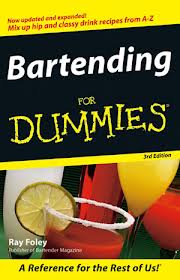
Ray has written dozens of books, including Bartending for Dummies. A perfect title for an outspoken, take-no-prisoners, ex-Marine who hates BS and bartender for dummiessome of the changes he sees in the bartender profession. But, I’ll let you in on a secret – deep down he’s a kind and gentle man who speaks his mind but carries no malice.
Let’s take the phrase ‘mixologist’ for instance. Here’s a quote I found in New Jersey (where the Foleys reside) Magazine, “A mixologist is a person who really doesn’t know how to tend bar but has the money to get a PR agent.” He told me pretty much the same thing when I interviewed him for this posting but went on to say that he really has no argument with the phrase and much respect for the serious mixologists. But, it’s those who are all ego and no skill, that get his Irish up. So if you call yourself “The Bar Guru” or “Mr. Mojito” stay out of his way.

Ray comes from the school where a good bartender is partly a person who serves drinks and mainly a person who does so with personality and customer service.

When I was running new products and we needed a signature or other drink to make the brand take hold, I learned two important things from Ray. The first was to let the drink idea come organically from behind the bar – the bartender or (forgive me, Ray) the mixologist. In other words, let the professionals do it and keep the marketing suits out of the kitchen.

The second was, in order for a drink recipe to take hold, keep it simple. According to Ray, “Creating a drink with avocado juice and lemongrass doesn’t impress me…how many bars have those ingredients?”

Of all the thousands of people who read Booze Business, I generally think about Ray when I do a posting. He never hesitates to let me know what he thinks and generally, the emails from Ray have been helpful and positive.

Except when I use the dreaded ‘mixologist’ word.
Leave A Comment

Booze Appellations: Does where it comes from matter?

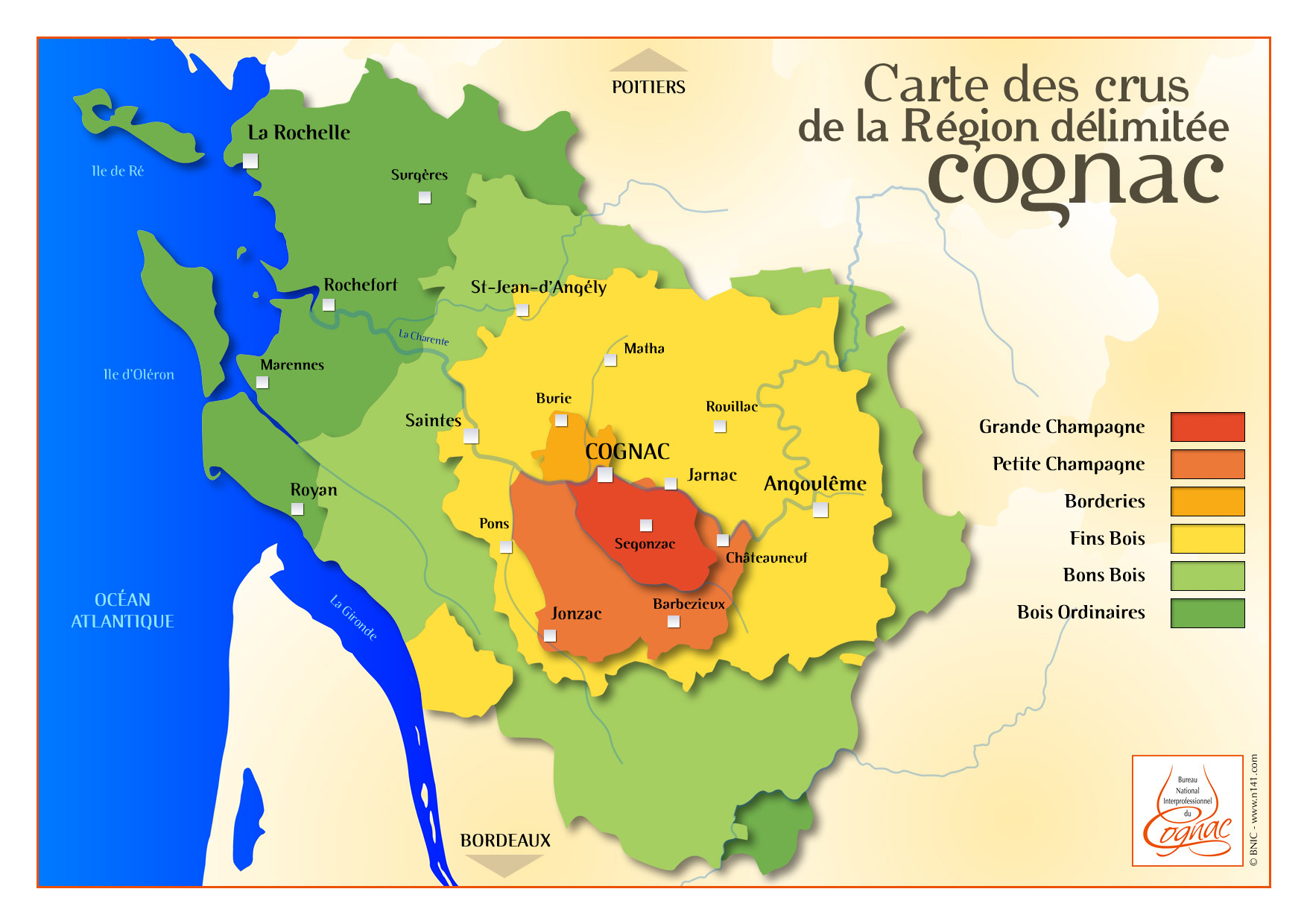
carte_des_crus+Some appellations matter a great deal and provide the reassurance that what you’re drinking is what you wanted. While appellations generally refer to wine, let’s look at it more broadly, including spirits. A Scotch from the US, for example, wouldn’t cut it, nor would Bourbon from Scotland. Different ingredients, recipes and distillation processes. Different origins.

What about cognac vs. brandy? Simple — all cognac is brandy. But, not all brandy is cognac. Brandy can only be labeled as cognac if it is produced in the designated growing areas in the Charentes region of France. To me, the cognac appellation means that the product has heritage, provenance and a unique production process behind it.

Okay, how about Tequila? All Tequilas are Mezcals, but not all Mezcals are Tequilas. Tequila must be made from at least 51% Blue Agave and come from the tequila region of Mexico. Anything less, or outside of the tequila region is known as a Mezcal.

Which brings me to Champagne vs. sparkling wine.

Robert Klara from Adweek interviewed me last month about an ad from the Champagne Bureau USA. You can find the article here.

The champagne people, in an effort to recapture lost ground to such sparkling wine products as Prosecco, Cava, Moscato, Sekt and of course, California Sparkling Wine, have run an ad letting consumers know that only Champagne comes from France. Leaving aside the silliness of the ad’s execution, I believe they simply don’t get the consumer’s interest in bubbly wine regardless of the appellation.

They have reason to be concerned. Sparkling wine as a category outsells Champagne by more than 10 to 1, and has grown much faster over the last five years.

sparkling wine image

I’m a Prosecco fan. It’s bubbly, dry, pleasant tasting and fun. Is it a replacement for Champagne? Sometimes, but I’m also a Moët & Chandon fan. For me, the difference is mood, occasion and situation. While I might serve Prosecco at a party, only Champagne would meet the drink needs of a wedding. A sparkling wine would be great at a picnic but only Moët Vintage Champagne would be right for celebrating opening night for one of my plays (sigh, if only).

If the Champagne people want me to drink more of their bubbly and less Italian or California sparkling wine, they need to understand consumer needs and wants and align their product offerings accordingly.

After all, I’m not drinking ‘imitation’ Champagne; I’m drinking real Prosecco.

Leave A Comment