
Quality Control

I can’t tell you how many times I’ve heard or even used the expression — “It’s all about what’s in the bottle” — when referring to the appeal of a spirits brand.

It’s homage to the intrinsic appeal of the product and recognition that image alone is not sufficient.

Couple of interesting questions…

If that’s the case why do some awful tasting brands of booze sell well? To maintain my friendships in the industry I won’t cite any examples but lets just say there are brands that sell more on image than product taste.

The more important question is, who decides if it’s “in the bottle?” For the smart marketer it’s based on consumer taste tests, sensory panels and research of that nature. Generally there are benchmarks, action standards and criteria or hurdles of acceptability.

Except when the owner or senior executive decides that he/she knows better than the consumer.

At Seagram there were the owners who made the decisions and their deputies who established the criteria.

I once asked the head of quality control who had been trained by Mr. Sam about Jack Daniels and got a 20-minute lecture on what was wrong with the quality of the brand. I protested that his view of the product was counter its performance in the market place and consumer appeal. Good thing Mr. Sam was long gone by this time or my head would have been rolled down the building plaza.

A good friend who was there when Seagram introduced a Scotch called 100 Pipers recently told me a story that illustrates the point.

Despite the fact that the company owned Chivas Regal, the leadership at the time, from Mr. Sam on down, was Canadian whiskey driven. So when the idea of 100 Pipers came along the QC folks, led by the owner, kept rejecting the formulation until it reached their notion of acceptability. Research was ignored; R&D and production was ignored; they kept fiddling with it until it tasted the way they thought it should. They felt that no one wants to drink Scotch so take the Scotch taste out.

The result — a good tasting Canadian whiskey that Scotch drinkers hated and Canadian whiskey drinkers wouldn’t consider. It never clicked.

Guess what? According to data I recently saw, it sells over 2 million cases today with more than half of that in Thailand. Who knew?

Still made by Chivas Brothers and owned by Pernod Ricard. Bet it tastes like Scotch too.

Leave A Comment

Great Tsotchkes (aka Swag) I Have Known

In keeping with the theme of the last few postings on sales promotion, dealer loaders and assorted point of sale issues, I thought I would continue that theme particularly in light of the holiday season. The Advertising and Promotion Awards in the Nov/Dec issue of Beverage Dynamics also prompted me to address this subject.

First, for the uninformed, the Urban Dictionary defines Tsotchke as “free goods given by companies to consumers, buyers, trade-show participants or other target audiences to promote brand recognition or customer loyalty.”

So, here are some points of view on the subject including some picks and pans from yours truly…

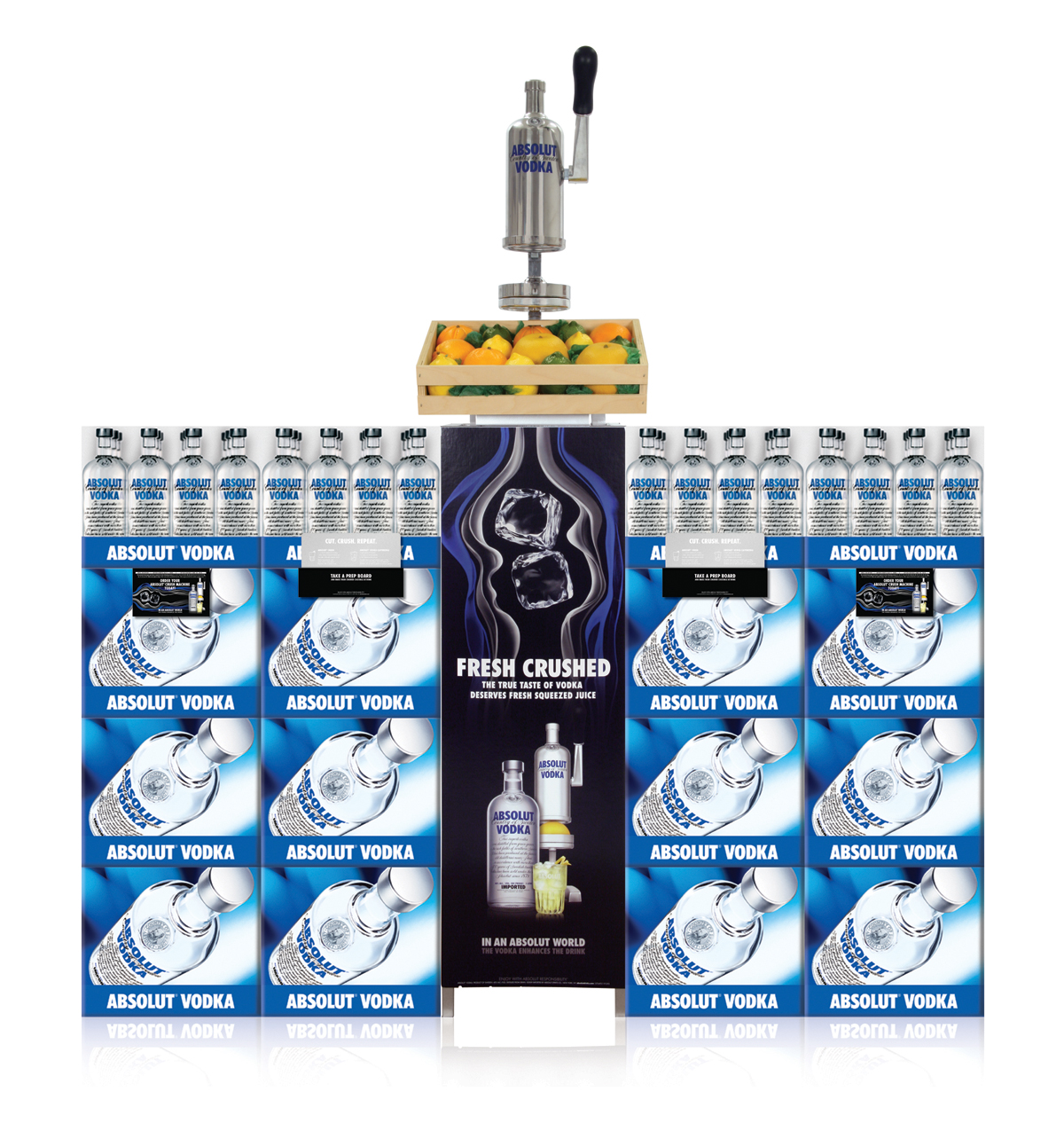
The most consistent and impactful POS has to go to the Absolut folks, particularly their multi-case floor displays. In fact, Beverage Dynamics gave it 1st place for 2010. No wonder, since Carol Giaconelli at Pernod Ricard (and a Seagram alumnae) is among the most imaginative sales promotion people I know. Even after working on Absolut for many years and for different regimes, Carol maintains her creative edge.
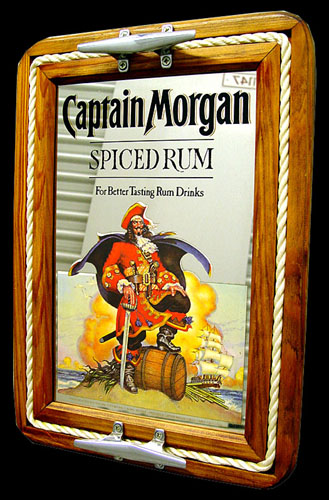
While I’m on the subject, I suppose the Hall of Fame for floor displays with loader items has to be the Captain Morgan mirror. According to Sam Ellias, the CM guru back in the day, that promotion was a prominent reason for the brand’s early success. Apparently, all a sales person had to do was to show the mirror in order to get the question, “how many cases do I need to buy?”

I managed to find a photo online. Despite it’s popularity at the time, you can still get one on eBay for under $25.
Now to the pans…

There are lots of awards in Beverage Dynamics for co-packs, gift packs and cartons/tins. The so-called value added packaging. Sorry, but I still don’t get it. In this environment manufacturers expect to entice consumers with Tsotchkes? If you want to measure effectiveness go to a flea market or eBay after the holidays and you’ll find glasses, shakers and pitchers galore. I wouldn’t be surprised if most of them came from retailers.

The Hall of Shame best/worst sales promotion item of all time came under my watch on behalf of Coyote Tequila. Don’t get me wrong the promotion item was great. It was a back bar pedestal with a howling Coyote as the centerpiece with a bottle on the base. Each time the bartender picked up the bottle a button was triggered and the sound of a howling Coyote was heard. Very cool. Very effective.

Just one small problem — Coyote Tequila tasted like crap. As the saying goes, “I wouldn’t drink it with your mouth.”

And now, dear reader, I have two questions for you.

Care to share your nominees for the best and worst promotions you’ve seen now or in the past? Either hit the comment button or send me an email.

Also, as I went through the 40 advertising and promotion awards by Beverage Dynamics, there were lots of first, second or third place winners from many major suppliers — Brown Forman, Heaven Hill, Skyy/Campari, Pernod, Bacardi and others. None were from Diageo. I wonder why? It could be that their market position and brand shares allows them to spend in other ways. That would explain the dearth of POS recognition. But no ads, traditional or digital, made it either. Huh.

As we used to say in Brooklyn, wait ‘til next year.

Leave A Comment

Tunnel of Love Tour

I first heard this expression when I was running Seagram America’s marketing and went with the CEO to visit markets in South America.

His view of senior management market visits can best be summed up as follows: “What a waste of time. Everything we will see in the stores will be staged for our visit. It’s a tunnel of love tour but we need to do it.”

I felt he kind of missed the point a bit. Market visits were, and still are, designed to “see how we look” and in that regard it’s in the human condition to put your best foot forward. But you can’t stage how the competition looks and what they are up to at point of sale and who can control what Mr. Retailer has to say.

My favorite tunnel of love anecdote took place in a large, important US market known more for its on-premise business than retail stores. Nevertheless, the distributor wanted to show us how good he and our local marketing and sales reps were doing and how our floor programs stood out.

The entourage — a better description might be the sheriff and the posse — went off on the visit/tour and once inside a store, some spoke to the owner or manager while others checked the displays and floor programs.

A member of the group was fascinated by a multi-case display of one of our brands and the very attractive and large case card that accompanied it. Never having seen it before, but still admiring it, he called others over to have a look. Someone touched the case card and to his surprise, smudged it. It was hand painted… and still wet. We all smiled at what appeared to be a permanent holiday display that obviously had just been put up for our visit. “That’s okay,” someone said, “maybe it’ll stay up and look how much real estate the brands have.”

Smiles turned to laughter at the next stop, also a large store with a massive display right at the entrance.

There was the same case card with the same smudge in the same spot.

I have no idea how they moved that thing so quickly.

Leave A Comment