How an Olive Launched a Brand

The Ketel One Story

Nolet, the distillery behind the vodka, recently celebrated its 325th anniversary and is run by the 11th generation of the Nolet family. While they rightfully take pride and recognition for this accomplishment, the real credit for the success of Ketel One (partially owned by Diageo) belongs elsewhere.

The distillery has been around since 1691 but they’ve only been producing Ketel One vodka since 1983. And, that’s where our story begins.

David van de Velde

I first met Dave back in 2010 when I started writing this blog. Here is that story. But, there is much more to the launch of Ketel One than I realized at the time I wrote that article.

David van de Velde
David van de Velde

In recognition of the sustained growth of the brand—reportedly selling at 2.1 million cases and the fifth largest import—and given the 325th anniversary, I contacted Dave to get more of the back story. Specifically, what were the most important elements in successfully launching the brand?

Before I get into that, here’s a brief historical context.

Vodka’s growth spurt began in the mid 1980s. The market was dominated by domestic brands (Smirnoff, Skyy was beginning its ascent, and others). Based on a number of factors, Absolut led the charge of the imports and became the poster child for vodka. Suddenly, two other market imports entered the fray with price points much higher than Absolut. One, Grey Goose, had a range of things going for it (name, packaging, country of origin, and the Sidney Frank team). The other had Carl Nolet Sr. and his belief in the ingenuity and business skills of David van de Velde.

The Challenge

The relationship with Carl Nolet, Sr. started with a handshake, a 20-foot container of Ketel One (litres and no 750ml bottles) worth around $20,000. Dave put up around $250,000 and no salary for two years. The US operation started in Dave’s garage in Sebastopol, CA under Luctor International, his licensed import company.

The obstacles were clear and considerable: Limited resources and going up against some powerful competition.

I was head of US marketing for Seagram at the time, and as mentioned in the earlier blog post, all I kept hearing about was this upstart brand and it’s appeal to bartenders and retailers. We paid some limited attention, but often Goliath doesn’t take action until David has made it too late.

How the brand was launched

Three elements became the focus of the launch of Ketel One:

1. An emphasis on the bartender and enlisting them as brand ambassadors.

2. Convincing the trade (sales reps and bartenders) of the taste superiority of the brand.

3. A very unique promotion and value added piece at point of sale in off premise stores.

The Bartender

Dave and Ketel One were not the first to recognize the power of the person behind the bar in influencing brand IMG_0490choice. But he did it in a most unusual way and with the help of technology. The most common approach to sway the views of bar and restaurant people—then and now—is face to face with brand ambassadors, sales reps, other bartenders, special tasting, events, and so on. But what do you do if you can’t afford this approach?

In Dave’s case, he told the Ketel One story on VHS video (this is before DVD) and mailed copies to the top bars, stores, restaurants, hotels, etc. He reports that, in his estimation, the videos were viewed by around 20% of those who received it, and that it created ambassadors on its own.

All I can tell you is that wherever I asked about Ketel One, a bartender or food and beverage manager would wave a copy of the video or tell me about it. While we take such actions for granted today, it was ahead of its time.

The Smell and Taste Test

At the heart of the Ketel One story was it’s clean, smooth taste, based on its unique (at the time) distillation process. How do you get this message across?

For Grey Goose, it was the Beverage Testing Institute (BTI) taste test showing Grey Goose on top of its competitors with a score of 96.

For Ketel One, here’s how Dave describes their program:

“We trained the distributor sales reps to do a “Smell and Taste Test” with the trade. That consisted of asking the storeowner or bartender to smell and taste a sample of his or her own favorite vodka. But, of course, when the alcohol touches the taste buds there is a numbing effect. So the next sample—which was Ketel One—with the nose and mouth taste buds numbed, tasted a lot smoother.”

The “trick” as he puts it, worked very well.

{For another clever/tricky sales taste test see the posting called Salesman in Winter.}

About That Olive…

Actually it wasn’t an olive, it just looks like one. It’s called a TomOlive and is a small green pickled tomato. “For a TomOlives_Aasmall company in the startup mode, it was extremely difficult to get Point-of-Sale (POS) materials into a store…so we decided to do something very unique,” Dave recalled.

It happened this way. Dave received a phone call at home from a stranger, who he assumed was a stockbroker, but turned out to be someone in the movie business. The man told him, “Find TomOlives, make a Ketel One martini with it, and you’ll have discovered the ultimate martini.” Dave tried it and it was indeed sensational.

(Having bought some recently on Amazon and tried them with vodka, I can attest to the fact that they taste great. In fact, we sometimes, add TomOlives to a salad to add a bit of a kick. But I digress.)

photoA week later, Dave was on his way to Alma, Arkansas to meet with the producer of the TomOlive. The next thing you know, he buys the annual production and co-packs it with Ketel One. Some of the Nolet people were “aghast” and said, “we’re not in the fruit business!” But he did it anyway and came up with a terrific marketing program that had bars, stores and consumers clamoring for Ketel One and TomOlives. It became the darling of the sales force.

I know this for a fact, because after telling me about the video, people would add, “and why don’t you have those olives?”

The punch line to the story is twofold. David van de Velde never found out the identity of the mysterious caller with the idea for TomOlives. Second, Diageo no longer uses the exclusive Ketel One TomOlive program. Sounds like an opportunity for another brand, if you ask me.

Oh, by the way, according to Dave, Diageo had the opportunity to own a chunk—if not all—of Ketel One in the early days but let it go by. When they finally got around to a significant investment, it had gone from millions to billions.

He’s Still At It

Power Assist Golf - StrikerOne

Finally, Dave continues to be motivated by the notion, “Find a Hole and Fill it.” He and some colleagues have invented The Striker-One™ Smart Golf Club. It is designed for golfers who can’t play anymore because of injury, disability, age or any number of reasons. You can learn more at info@PowerAssistGolf.com. Or contact me and I’ll put you in touch with David van de Velde.

A remarkable man with a thirst for ingenuity and creativity.

Leave A Comment

The Last Word: South Africa

From Booze to Boutique Hotels—The Peter Fleck Story

My wife and I, and another couple, recently returned from a trip to South Africa. A wonderful experience as we toured from one end of the country to the other—major cities, photo safari, animal reserves, seaside towns, and, of course, wine country.

I’ll be writing about South African wines at a later date. But, now, I’d like to tell you about a former Seagram colleague and the incredible boutique group of hotels he owns, called The Last Word.

About Peter Fleck

Peter Fleck
Peter Fleck

Peter’s work life started as a journalist for a local newspaper, which led to a PR position with KWV South Africa (Pty) LTD, a large wine cooperative, and currently a leading producer of wines and spirits. From there he moved to International Distillers and Vintners (IDV), a predecessor company to Diageo, starting as a brand manager and ending up as the South African CEO. Along the way, together with James Espey and Tom Jago, he created Malibu Rum. (He also has been involved with James and Tom in the Last Drop Distillers.)

In the early 1990s, he joined Seagram to start a new affiliate in South Africa and was the country’s GM until the sale of Seagram in 2001. Those of us who knew Peter in those days always admired his tenacity, business skill and sense of humor—an all around terrific guy with a focus on innovation. But I didn’t realize just how innovative.

On a business trip to the Cameroons, in West Africa on behalf of Seagram, an idea struck him. He had just finished lunch at “the best eating place in Africa.” The restaurant was part of a small hotel that was an oasis amidst “Africa’s trademark poverty.” It was an oasis of warmth, friendship, and full of hopes and dreams. In his words,

No amount of imagination could have anticipated such contrast; leafy-green palms, bamboo and lawns surrounding a sprawling mansion in immaculate condition. Inside were seven luxurious bedrooms and, of course, an intriguing restaurant. The smiles, laughter and charm were enchanting… The restaurant, like the accommodation, was Africa’s hidden secret.

Despite an old colonial style it was authentic Africa, full of hopes and dreams… This was my kind of place, a diamond discovered in the rough, a vivid memory of geniality where time and space worked together to produce one of the world’s best places to stay. 

In 2003, the daydreaming stopped and The Last Word was launched.

The Mice That Roar

Peter and his team put together an employee manual in the form of a book for the staff to understand the properties, their goals and values and what it takes to exceed expectations. How many employee manuals are you aware of that are 170 well-written and thoughtful pages? How many hotels—or any service entity for that matter—have “delight the customer” at the heart of their business proposition?

An excerpt from that manual:

The mice that roar

While we are a little known travel product we take on the quietness of a mouse, moving into new space as though by stealth, under the radar. We act with grace; our preparedness nevertheless has to be extensive. Even in mice survival requires a big heart. And if we are heard about only in whispers initially, this is also by design, for to be discovered as a hidden gem and whispered about like a secret has an innate power of its own.

The Hotels

Let’s look at the three Last Word properties. All are a 5 star experience and none have more than 10 rooms. They are all consistent in their spaciousness, ambiance, hospitality, and the staff’s desire to make you feel welcome and at home. The only difference among them is the locale, which is why we stayed at all three.

Franschhoek Hotel

The Last Word Franschhoek 2015 (91)

In the heart of wine country, with amazing vineyards in Franschhoek and nearby Stellenbosch, this hotel consists of 10 rooms (including 2 pool suites), and is in the heart of the city. The hotel reflects its Huguenot heritage, and has been a consecutive finalist in the World Travel Awards for South Africa’s Leading Boutique Hotel.

Constantia Hotel

Constania

Here is how I described this property in TripAdvisor. It is in a Cape Town suburb and near to sites like Cape Point, Victoria & Albert Waterfront, a penguin reserve, and more.

“All the boutique hotels in The Last Word group are magnificent and special. But, this property was outstanding. The grounds, the rooms, the overall ambiance, and the helpfulness of the staff were just terrific. The setting is not to be believed and a joy to come back to after a hard day of sightseeing.”

Long Beach Hotel

The Last Word Long Beach 2015 (20)This was a wonderful way to relax and unwind on this beach property, which is exactly how we ended our trip. Each of the 6 rooms overlooks the beach and ocean. In fact, you go directly on to the beach from the hotel. It turns out this was the first of three properties and started as a B&B in Peter’s home.
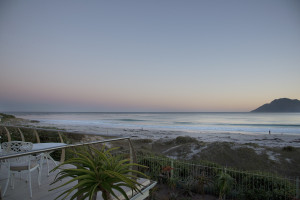
Long Beach

* **

The worlds of spirits/wine and hospitality have much in common. Both thrive on product excellence and innovativeness. And, selling entertainment in a bottle is not all that different than selling entertainment in an experience.

By the way, an outstanding breakfast, wifi and premium spirits and fabulous South African wines are included.
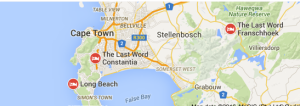
The Last Word locations
Leave A Comment

Spirits of the world: Mastiha from Greece

How a chewing gum became a liqueur

Mastika or Mastiha (‘mahs-Tee-ha’) is a liqueur from the Greek island of Chios that is flavored with a resin or sap from trees on the island. The word might sound familiar—it is derived from the Greek “to chew.” In English, it is ‘masticate’—meaning to chew or munch on.

Mastiha Trees
Mastiha Trees

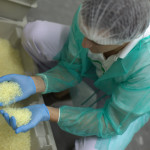
It turns out that this resin/sap sheds its “tears” and became the original chewing gum

The resin or "gum"
The resin or “gum”

enjoyed as far back as the 5th Century BC, according to Difford’s Guide:

The ancient Greeks chewed mastic for fresh breath, as did the Romans, Byzantine Greeks and later the Venetians, Genoese and the Ottoman Turks.

The mastic gum is made into a liqueur that receives the “Protected Designation of Origin status on the island of Chios since it is the only place where the trees “cry teardrops” during harvest.

In Greece, Mastiha is served a number of ways: With appetizers, deserts or as a digestive. In the hands of the bar chef and mixologists, there are some terrific Mastiha cocktails being made around the world.

You can also buy the mastic gum itself on Amazon and there’s even a store called Mastihashop, where you can buy not only the gum but also other products made from Mastiha.

But if it’s okay with you, I’ll stick with the booze product.

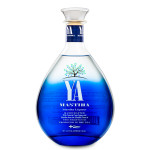
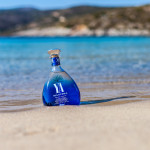
Ya Mastiha

Ya Mastiha
Ya Mastiha

Allow me to introduce Nicholas (Nick) Papanicolaou, a passionate entrepreneur and founder/owner of Ya Mastiha, which is derived from the Greek toast Yamas—“to our health.” Nick is a Greek-American who had one of those ‘aha’ moments, which led him to shift his entrepreneurial efforts to the Booze Business and introduce Ya. Here’s how it started:

Growing up Greek-American, I remember longing for my summers to spend a few weeks in the picturesque Greek Islands. Every year, I invited a friend to join me so I could share my heritage. In the summer of 2009, twenty-eight of my friends from all over the world joined me in Mykonos to celebrate my birthday. Despite vast differences in cultures, personalities and ages, we bonded with the help of one unifying force: Mastiha liqueur.

Like most startups, the brand faces many uphill challenges—limited resources (people and money), trade acceptance (distribution, bars, and stores), and building consumer awareness and trial. But like any tenacious businessperson, Nick is well equipped to roll with the punches.

The brand is only in New York, but can be purchased on YaMastiha.com/Buy where a retail partner will ship it to most states. It has some traction among Greek-Americans, for obvious reasons. I was surprised when he told me that a significant number of sales are in Tarpon Springs, Florida, which, I learned, is one of the largest concentrated communities of Greek-Americans in the U.S.

Entering the mainstream drinking market is among the list of challenges.

The product

Ya Mastiha is 30% AbV (60 proof) and made with natural cane sugar and Mastiha from the Chios Island in _MG_3737Greece. It’s produced in the U.S. but Nick has plans to also introduce a product produced in Greece.

The taste? Well, a bit unusual. I enjoyed it on the rocks and found it to be an excellent digestif. I don’t generally provide taste reviews but to me Ya has a slight Ouzo/anise aroma but doesn’t get milky over ice. What I really like about it is what it does to a cocktail. Difford’s has some interesting recipes like the Greek Martini (Mastiha, gin, dry vermouth and a touch of ouzo) or Smoky Tears (Mastiha, mezcal, pink grapefruit juice and simple syrup) or Cosmopolis Cocktail (a variation on the Cosmo with a splash of Mastiha added).

Ya Mastiha sells for $32.99 and you can buy it online here, here and through Craft Spirits Exchange.

It’s a fun product best shared with a group of friends. Plate smashing is optional.

Yamas!

(Dear Reader — If you come across an interesting spirit/liquor from around the world that is not widely known, contact me and tell me about it.)

Leave A Comment